Introduction
The world of personal audio has evolved dramatically over the last few decades. From bulky over-ear cans to sleek true wireless earbuds, technology constantly pushes the boundaries of how we experience sound. Today, a new debate has emerged for fitness enthusiasts, audiophiles, and everyday listeners alike: bone conduction vs. air conduction headphones. But what exactly is the difference, and which one is the right choice for your lifestyle? In this comprehensive guide, we will break down the science behind both audio transmission methods, explore their pros and cons, and help you make an informed purchasing decision.
What is Bone Conduction Technology?
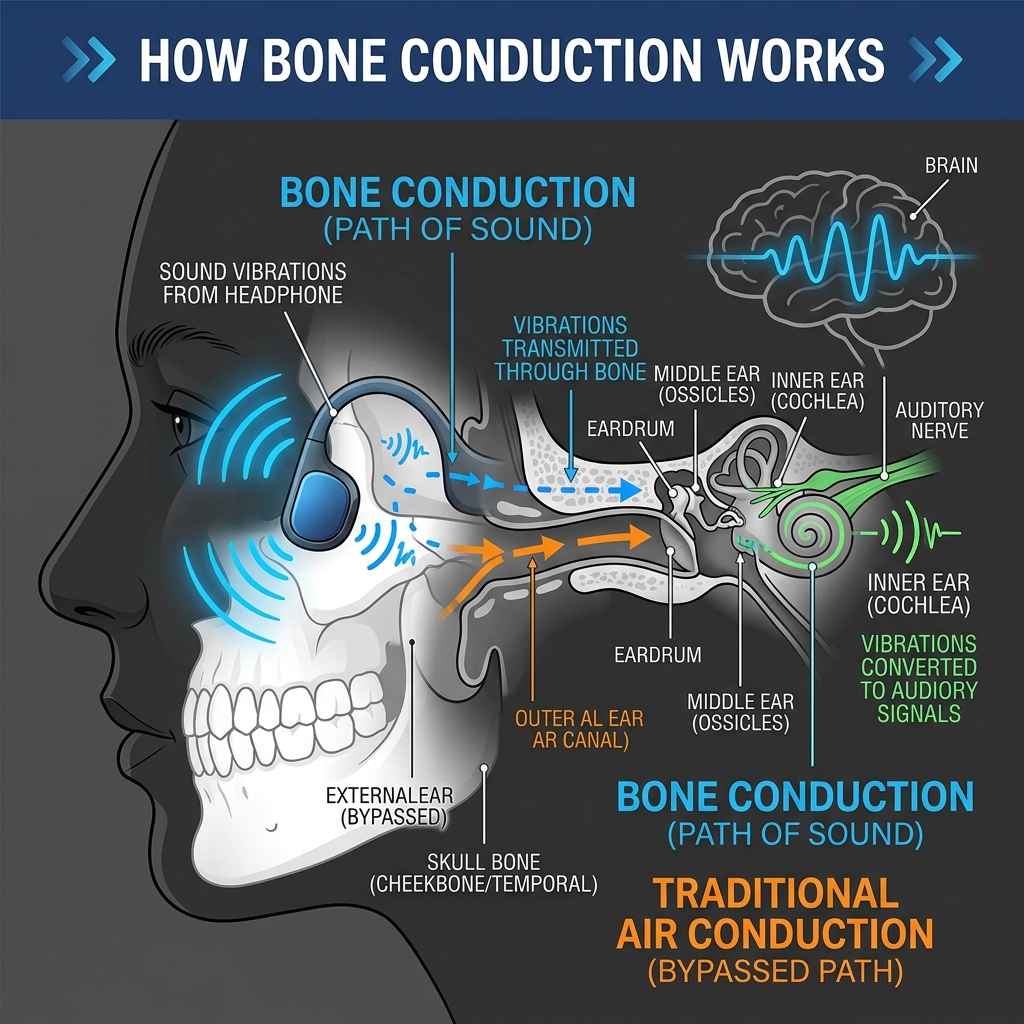
To understand bone conduction, we first need to look at how we naturally process sound. Typically, sound waves travel through the air, enter the ear canal, and vibrate the eardrum. These vibrations are then passed to the cochlea (the inner ear), which translates them into electrical signals for the brain. Bone conduction completely bypasses the eardrum. Instead of resting inside or over the ear, these headphones sit directly on your cheekbones (specifically the temporal bone) just in front of your ear.
When you play audio, transducers in the headphones create vibrations that travel through your skull directly to the cochlea. This might sound like science fiction, but it is actually a phenomenon you experience every day. When you speak and hear your own voice, you are hearing a combination of air-conducted sound and bone-conducted sound vibrating through your own skull. In fact, the famous deaf composer Ludwig van Beethoven famously used bone conduction to compose music by biting onto a metal rod attached to his piano, allowing the vibrations to travel through his jaw to his inner ear.
How Do Air Conduction (Traditional) Headphones Work?
Air conduction is the traditional method used by 99% of the headphones on the market today. Whether you are using massive studio monitors or tiny wireless earbuds, they all rely on air to transmit sound. These headphones feature dynamic drivers (or sometimes balanced armatures or planar magnetic drivers) that act like tiny speakers. They push and pull air to create sound waves that travel down your ear canal and physically strike your eardrum.
There are two primary types of air conduction headphones: over-ear and in-ear headphones. Over-ear headphones create a sealed acoustic chamber around your entire ear, while in-ear monitors (IEMs) create a seal directly inside your ear canal using silicone or foam tips. This physical seal is crucial because it provides passive noise isolation, blocking out environmental sounds and preventing your music from leaking out.
Key Differences: Bone Conduction vs. Air Conduction
Let’s take a look at a side-by-side comparison of these two distinct technologies.
| Feature | Bone Conduction | Air Conduction |
|---|---|---|
| Sound Transmission | Through cheekbone vibrations | Through air in the ear canal |
| Situational Awareness | Excellent (Ears remain completely open) | Low to Moderate (depending on ANC) |
| Audio Quality (Bass) | Lacks deep bass, can feel ticklish at high volumes | Rich, full-spectrum sound with deep bass |
| Best Use Case | Outdoor running, cycling, swimming, hearing aid alternative | Commuting, critical listening, studio work, gaming |
| Comfort over long periods | High (no ear fatigue or sweat buildup inside ear) | Varies (can cause ear fatigue or pressure) |
Pros and Cons of Bone Conduction Headphones
The Advantages
The absolute biggest advantage of bone conduction is situational awareness. Because your ear canal is left completely unblocked, you can hear everything happening around you just as clearly as if you weren’t wearing headphones. This makes them the safest possible choice for runners, cyclists, and pedestrians who need to hear approaching traffic, sirens, or other people. Additionally, because there is nothing inside your ear, you avoid issues like ear wax buildup, ear infections, or the general discomfort of having a silicone tip wedged in your canal for hours.
The Disadvantages
The trade-off for situational awareness is audio fidelity. Bone conduction simply cannot reproduce the deep, thumping bass or the crystal-clear treble highs that traditional headphones can. At high volumes, the heavy vibrations on your cheekbones can also feel slightly ticklish or uncomfortable to some users. Finally, because your ears are open, they are practically useless in very loud environments like airplanes or noisy subway trains unless you wear earplugs simultaneously.
Pros and Cons of Air Conduction Headphones
The Advantages
If you care about sound quality, air conduction is the only way to go. Traditional drivers offer massive dynamic range, incredible bass response, and detailed soundstages. Furthermore, because they physically block your ear canal (passive isolation) and often feature Active Noise Cancellation (ANC), they allow you to completely immerse yourself in your audio and block out the outside world.
The Disadvantages
The isolation that makes them great for airplanes makes them dangerous for outdoor sports. Running near a busy road with noise-canceling earbuds can lead to accidents if you cannot hear cars approaching. Furthermore, wearing tight over-ear headphones can make your ears sweat, and wearing in-ear buds for prolonged periods can lead to ear canal fatigue or discomfort.
Frequently Asked Questions
Are bone conduction headphones safer for your hearing?
This is a common misconception. While they bypass the eardrum, the vibrations still reach the cochlea. Listening to music at excessively high volumes for prolonged periods can still cause sensorineural hearing loss, regardless of whether you use bone conduction or air conduction. Always practice safe listening habits.
Can people around me hear my music with bone conduction?
Yes, there is some sound leakage. Because the transducers vibrate against your skin, some of that vibration transfers to the air. While it won’t sound like a loud speaker, someone sitting right next to you in a quiet room will likely hear a faint tinny sound.
Conclusion: Which One Should You Buy?
Ultimately, the choice between bone conduction vs. air conduction headphones comes down to your primary use case. If you are an audiophile looking to get lost in your favorite albums, a frequent flyer trying to drown out jet engines, or a gamer needing precise directional audio, traditional air conduction headphones are the clear winner.
However, if you are an athlete, a marathon runner, a cyclist, or simply someone who hates the feeling of having things shoved inside their ears, bone conduction headphones are a revolutionary piece of technology. They provide the soundtrack to your workout while keeping you safely connected to the world around you. Both technologies have their place, and many audio enthusiasts find themselves owning one of each for different situations.
Discuss more about this, FAQ, Announcements and Miscellaneous, over on our community.
