In the mid-1980s, the landscape of professional audio recording was undergoing a tectonic shift. Digital recording was emerging, demanding higher precision, wider dynamic ranges, and absolute isolation in the studio. In 1985, a German audio manufacturer named Eugen Beyer’s company—Beyerdynamic—quietly released a trio of headphones designed to meet these exacting standards. This series, designated the “DT” (Dynamic Telephone) line, consisted of three models: the closed-back DT 770, the semi-open DT 880, and the open-back DT 990.
While all three models found their respective niches, it was the closed-back Beyerdynamic DT 770 Pro that transcended its studio-utility roots to become a global industry standard. For over four decades, from legendary recording facilities in Abbey Road to bedroom studios, the DT 770 Pro has remained virtually unchanged. Why has this specific model achieved such legendary status, and how does it continue to compete in a market flooded with modern active noise-canceling and wireless alternatives?
At HeadphonePalace, we believe that understanding the legacy of iconic audio gear helps creators make informed choices for their setups. Whether you are looking for in-depth gear reviews on our headphones category or exploring detailed breakdowns in our comparison section, the DT 770 Pro remains a benchmark by which all other studio monitors are measured.
Built Like a Tank: The Triumph of German Engineering
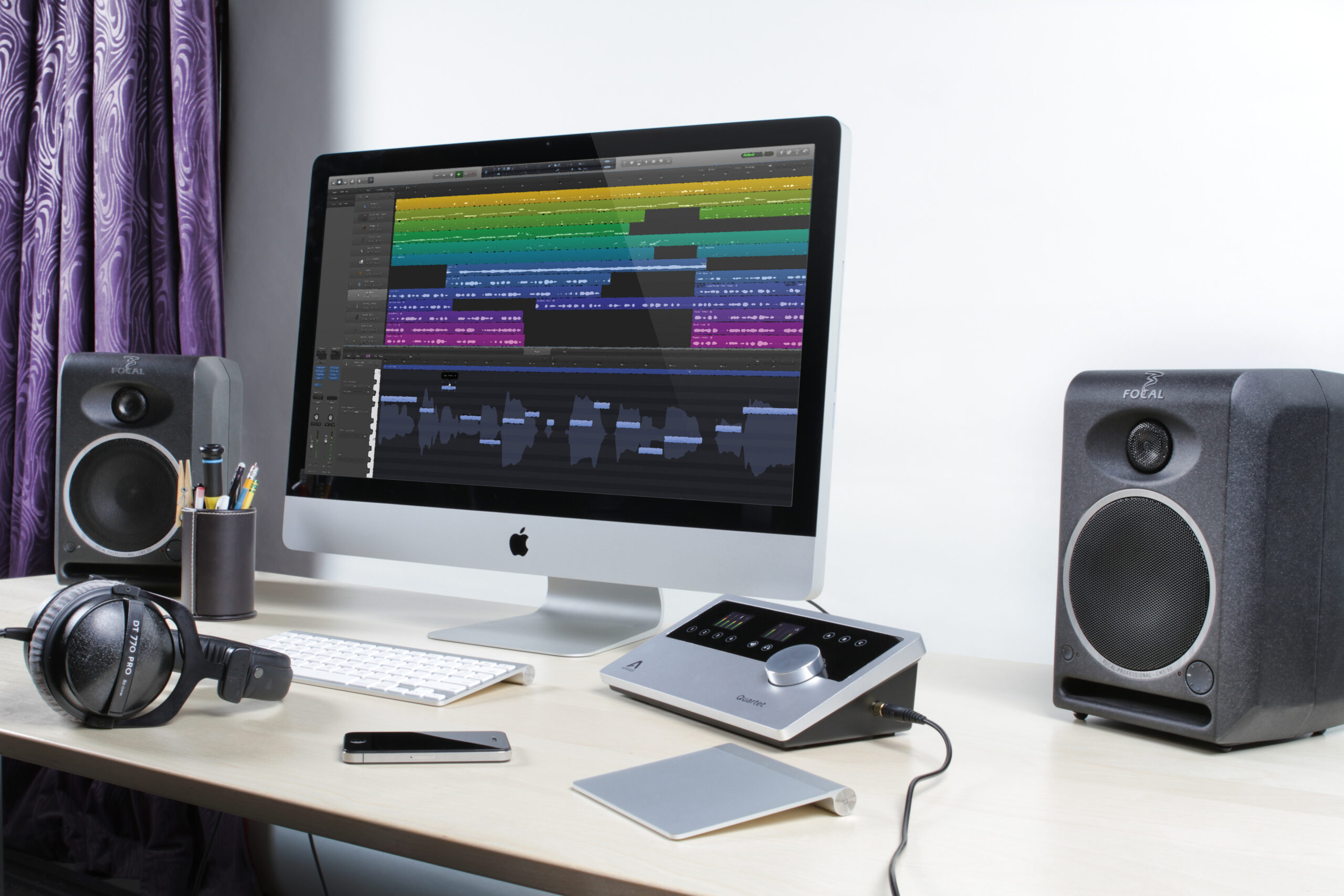
One of the defining reasons for the DT 770 Pro’s longevity is its build quality. Unlike many modern consumer headphones that rely heavily on plastic and glued joints, the DT 770 Pro is built for survival in the chaotic environment of a working studio.
- Spring Steel Headband: The core structure is a thick, flexible strip of steel wrapped in a padded, buttoned leatherette sleeve. It can withstand being twisted, dropped, or sat on without losing its clamping force.
- Reinforced Composite Earcups: The cups themselves are constructed from thick, textured ABS plastic that resists scratches and structural cracks.
- All-Metal Yokes: The forks that hold the earcups are made of powder-coated steel, ensuring the pivot points do not snap under stress.
- 100% User-Serviceable Design: Almost every single part of the DT 770 Pro can be purchased individually and replaced by the user. From the headband pad and velour ear cushions to the drivers themselves, Beyerdynamic continues to manufacture replacement parts for a design that is forty years old.
This modularity means that a single pair of DT 770 Pro headphones is rarely a temporary purchase; rather, it is a long-term investment that often outlasts the audio interfaces and mixing consoles it is plugged into.
The Sound Signature: Analytical Precision and the ‘Beyer Peak’
The primary requirement of a studio monitor is transparency. A sound engineer needs to hear exactly what is being recorded—flaws, noise, sibilance, and all. The DT 770 Pro achieves this with a distinct analytical tuning that emphasizes clarity and separation.
However, its sound signature is not perfectly flat. It is famously characterized by:
- Deep, Extended Sub-Bass: Because it is a closed-back headphone, it can seal the acoustic chamber around the ear, allowing it to reproduce sub-bass frequencies down to 5 Hz. It has a slight boost in the lower frequencies that provides energy without bleeding into the midrange.
- Clean and Neutral Midrange: The mids are slightly recessed (often referred to as a mild ‘U-shaped’ signature). This keeps vocal tracking clean and separates instruments, though some mixing engineers find it requires a bit of mental adjustment to ensure vocals aren’t mixed too loud.
- The Treble Peak (‘Mount Beyer’): The DT 770 Pro is notorious for a sharp spike in the high frequencies around 8 kHz to 10 kHz. While audiophiles sometimes find this peak fatiguing or piercing, studio engineers rely on it to detect clicks, pops, mouth noises, and edit points during tracking.
To visualize how the DT 770 Pro performs across the audible frequency spectrum, examine the curve below, which highlights the analytical tuning and the legendary treble peak:
Understanding the Impedance Variants: 32, 80, and 250 Ohms
Unlike most consumer audio products that come in a single configuration, Beyerdynamic sells the DT 770 Pro in three distinct impedance configurations. This is where many buyers get confused. The impedance, measured in Ohms, determines how much electrical resistance the headphone drivers present to the source amplifier.
Understanding the difference is crucial because choosing the wrong impedance can result in headphones that sound quiet, thin, or lack dynamics when plugged into lower-power sources. Below is a detailed breakdown of the three variants, their specifications, and their targeted use cases.
| Impedance Model | Cable Configuration | Ear Cushion Type | Power Requirements | Ideal Applications |
|---|---|---|---|---|
| 32 Ohm | 1.6m (5.2 ft) Straight | Soft Leatherette (Easy clean) | Very Low (Direct phone/laptop output) | Mobile recording, field work, office use, casual listening |
| 80 Ohm | 3.0m (9.8 ft) Straight | Silver Velour (Ultra-comfortable) | Medium (Audio interfaces, laptop jacks) | Studio tracking, vocal booth, podcasters, instrumentalists |
| 250 Ohm | 3.0m (9.8 ft) Coiled | Silver Velour (Ultra-comfortable) | High (Dedicated headphone amplifier required) | Critical mixing, mastering, professional console monitoring |
- The 32-Ohm Variant: Optimized for mobile recording, smartphones, laptops, and portable field recorders. Because it has very low electrical resistance, it can reach high volume levels without requiring a dedicated amplifier. It features leatherette ear pads, which offer slightly higher passive isolation but can get warm during long sessions.
- The 80-Ohm Variant: This is the most popular “all-rounder” model in studios. It strikes a perfect balance between power efficiency and sound control. It features a long straight cable and the iconic silver velour ear pads. The 80-Ohm model is slightly more bass-heavy than the 250-Ohm version and is widely used by drummers, vocalists, and podcasters during tracking.
- The 250-Ohm Variant: The purist’s choice. Designed specifically for professional audio interfaces, mixing desks, and dedicated headphone amplifiers. The high impedance reduces distortion and optimizes electrical damping, resulting in the most detailed transient response and tightest bass control. It comes with a coiled cable to prevent tangling around mixing consoles.
Isolation and Comfort: The Studio Workhorse
Studio monitoring often involves wearing headphones for hours on end, making comfort as important as sound quality. The DT 770 Pro is renowned for its outstanding ergonomics.
- The Magic of Velour: The silver velour ear cushions are breathable, soft, and distribute pressure evenly around the ears. Unlike leatherette pads that can cause sweating and heat buildup, velour pads maintain a comfortable temperature over extended editing sessions.
- Acoustic Isolation: As a closed-back design, the DT 770 Pro excels at keeping external noise out while preventing sound leakage. This is critical in a recording booth: a vocalist needs to hear the backing track without the microphone picking up the sound leaking from the headphones.
- Clamping Force: The headband applies a firm yet comfortable clamping force that ensures the headphones remain secure even when physical movement occurs (such as a drummer tracking a complex rhythm).
How the DT 770 Pro Compares to Modern Rivals
The audio market has evolved significantly since 1985. Today, headphones like the Audio-Technica ATH-M50x, Sennheiser HD 560S, and Sony MDR-7506 compete directly for space on engineers’ desks.
- DT 770 Pro vs. Audio-Technica ATH-M50x: The ATH-M50x is more portable due to its folding design and detachable cable. However, the DT 770 Pro offers a wider soundstage (rare for a closed-back) and far superior comfort thanks to its circular velour pads, compared to the M50x’s smaller leatherette pads.
- DT 770 Pro vs. Sony MDR-7506: The MDR-7506 is another studio legend, famous for mid-range presence and vocal monitoring. But the DT 770 Pro delivers much better sub-bass extension and build durability, making it more suitable for modern electronic music and cinematic production.
While modern consumer headphones prioritize wireless connectivity and active noise cancellation (ANC), these features introduce digital latency, battery dependency, and digital signal processing (DSP) that alters the source audio. The DT 770 Pro remains purely analog, guaranteeing zero latency, zero battery anxiety, and an uncolored representation of the raw audio signal.
The Legacy Endures: Why You Still Need a DT 770 Pro
In an era where technology becomes obsolete in a matter of months, the Beyerdynamic DT 770 Pro stands as a monument to timeless engineering. Its survival is not due to marketing hype or cosmetic redesigns, but to its sheer reliability, ease of repair, and uncompromising performance.
For music producers, video editors, podcasters, and audiophiles seeking an honest, durable, and comfortable listening tool, the DT 770 Pro is not just a purchase—it is an entry into a forty-year legacy of audio excellence.
If you are building your first studio or looking to upgrade your audio setup, visit our blog category for more tips on optimizing your acoustic environment. For head-to-head comparisons of the latest monitoring gear, check out our comparison category to find the perfect gear for your creative journey.
Discuss more about this, FAQ, Announcements and Miscellaneous, over on our community.
