When searching for the ultimate listening experience, audio enthusiasts spend thousands of dollars on high-end drivers, digital-to-analog converters, and cables. Yet, one of the most critical factors in headphone performance is often overlooked: the earpads. Earpads are the physical and acoustic interface between your ears and the headphone drivers. They do not just provide cushion; they define the soundstage, seal in the bass, and dictate whether you can wear your headphones for hours or feel the need to rip them off after twenty minutes.
Over time, original earpads wear out, flatten, or begin to flake. When this happens, replacement becomes a necessity. However, choosing replacement pads presents an overwhelming array of choices. From luxurious sheepskin and soft velour to modern hybrid structures and cooling gel, each material and design choice drastically alters comfort and acoustic performance. This guide, brought to you by the team at Headphone Palace, will walk you through the details of how to choose the right earpads for your specific needs, ensuring your headphones sound and feel their absolute best.
Why Earpads Matter: The Science of Comfort and Sound
To understand why choosing the right earpads is so crucial, we must look at how over-ear and on-ear headphones function. The driver inside the cup produces soundwaves that travel into your ear canal. However, these waves do not travel in a vacuum; they interact with the chamber formed by the earpad cup, your ear shape, and the sides of your head. This interaction creates the final sound signature you hear.
The acoustic seal is the single most important factor in low-frequency reproduction. Bass frequencies have long wavelengths that easily escape through any gaps in the seal. A dense, non-porous earpad material, such as leather, creates an airtight seal that forces the low-frequency energy directly into your ear canal. If you break that seal with a porous material like velour or by wearing glasses that lift the pad away from your temple, you will instantly notice a significant drop-off in bass quantity and impact.
Additionally, the distance between the driver and your ear canal (the pad’s thickness) and the inner opening diameter shape the soundstage. A deeper pad increases the acoustic distance, typically widening the soundstage and making the sound feel more “out of head.” Conversely, a shallower pad brings the driver closer to the ear, resulting in a more intimate, immediate sound, but potentially making the highs sound harsher due to less air damping.
An In-Depth Breakdown of Earpad Materials
When browsing through the headphones category for replacement options, you will find five primary material types. Each has its own distinct sonic profile and comfort footprint. Let us break down their characteristics so you can make an informed decision.
1. Real Leather (Sheepskin / Cowhide)
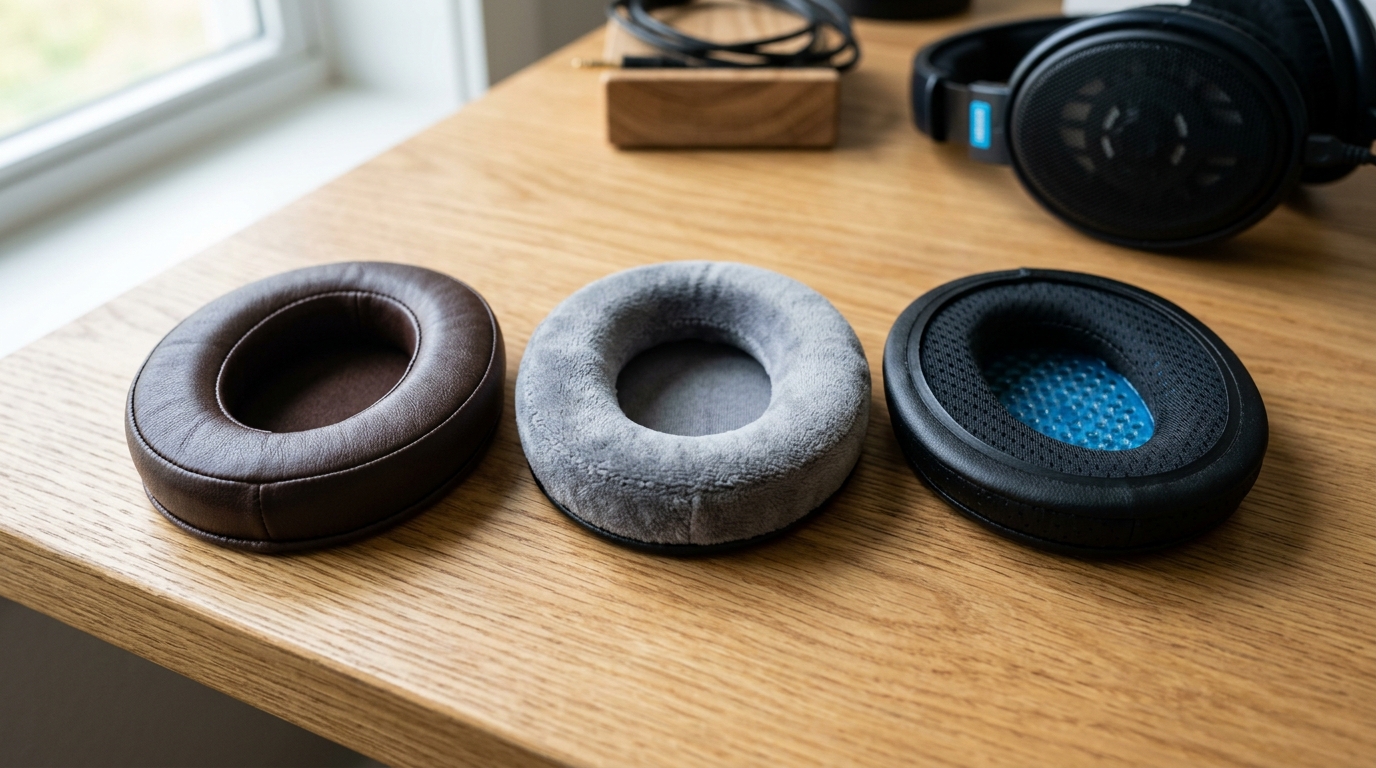
Real leather, particularly sheepskin, represents the premium tier of earpad materials. Sheepskin is incredibly soft, supple, and conforms naturally to the contours of your head. Sonora or lambskin pads offer a luxurious feeling that synthetic materials struggle to replicate.
- Sound Profile: Excellent acoustic seal. It boosts sub-bass extension, increases mid-bass impact, and slightly tames harsh high frequencies.
- Comfort: Extremely comfortable and soft, but can run warm over long listening sessions as it traps body heat.
- Durability: Highly durable. With basic cleaning and occasional leather conditioning, real leather pads can last for years without flaking.
2. Protein Leather / Pleather (Synthetic Leather)
Protein leather is a synthetic alternative made from polyurethane combined with organic protein fibers. It is the most common material used by manufacturers for stock earpads because it mimics the appearance and isolation of real leather at a fraction of the cost.
- Sound Profile: Similar to real leather, it provides a strong acoustic seal, tight bass, and clear highs.
- Comfort: Smooth and soft initially, but prone to getting sweaty and clammy because synthetic material has zero breathability.
- Durability: Moderate. Over 1 to 3 years, sweat and facial oils break down the polyurethane, causing the top layer to crack, peel, and flake off.
3. Velour and Microfiber
Velour is a woven fabric that mimics velvet, whereas microfiber is a tightly woven synthetic fiber. They are highly favored by audiophiles who prioritize long-term wearability over absolute sound isolation.
- Sound Profile: Porous by nature, velour allows air and soundwaves to pass through. This reduces sub-bass pressure, leading to a leaner, flatter bass response. However, it expands the soundstage, making headphones sound more open and airy.
- Comfort: The most breathable material. It keeps your ears cool and does not feel sticky or sweaty.
- Durability: Velour is durable, but it collects dust, pet hair, and skin flakes. Over time, it absorbs sweat and oils, which can make it smell or lose its shape unless washed regularly.
4. Hybrid Earpads
Hybrid pads are an ingenious solution designed to capture the acoustic benefits of leather and the comfort of velour. They typically feature solid leather on the outer ring, velour or micro-suede on the face that touches your skin, and perforated leather or velour on the inner ring.
- Sound Profile: The outer leather ring maintains the acoustic seal to prevent bass leakage, while the porous inner face prevents muddy reflections. This results in a balanced, natural sound with great bass impact and a wide soundstage.
- Comfort: Outstanding. The soft fabric face feels pleasant against your skin, while the hybrid design manages heat better than full leather.
- Durability: Excellent, as the structural parts are made of durable leather/pleather, and only the face uses fabric.
5. Cooling Gel-Infused Pads
Designed primarily for gamers and users in hot environments, cooling gel pads use a layer of thermal gel directly beneath a breathable fabric cover, backed by high-density memory foam.
- Sound Profile: Depends on the outer wall material, but usually balanced, leaning towards a slightly punchy bass due to the solid gel core.
- Comfort: Provides an immediate, refreshing cooling sensation when first worn. However, once the gel matches your body temperature (usually after 30 to 45 minutes), the cooling effect diminishes.
- Durability: High, though they are heavier than standard foam pads.
Earpad Material Comparison Table
To help you weigh your options, the table below highlights how different materials perform across the key categories of acoustic sealing, comfort, durability, and cost:
| Material Type | Acoustic Seal | Bass Response | Heat Retention | Durability | Price Range |
|---|---|---|---|---|---|
| Real Sheepskin | Excellent | Warm / Deep Boost | High | Excellent | $40 – $80 |
| Protein Pleather | Good | Punchy / Sealed | Very High | Low – Moderate | $15 – $30 |
| Velour / Fabric | Poor – Moderate | Linear / Lean | Low (Cool) | Moderate | $20 – $40 |
| Hybrid Design | Good – Excellent | Balanced / Rich | Medium | High | $35 – $60 |
| Cooling Gel | Good | Moderate | Low (Initial) | High | $25 – $50 |
Acoustic Impact: Tuning Your Headphones with Pads
Many listeners do not realize that swapping earpads is one of the most effective physical equalization (EQ) methods available. By changing the density, porosity, and volume of the pad, you are filtering different frequency ranges.
If you find that your current headphones are too bright, piercing, or sibilant in the treble, transitioning to a dense sheepskin or memory foam pad will absorb some of those harsh reflections, rendering the highs smoother and more tolerable. Conversely, if your headphones sound muddy, dark, or congested, switching to perforated leather or velour pads will bleed off some of that excess bass energy, opening up the midrange and giving the upper registers room to breathe.
The graph below illustrates how acoustic isolation and breathability trade off across the main material groups, showing why hybrid designs have become so popular for listeners looking for a balance between the two metrics.
How to Choose: A Step-by-Step Selection Guide
If you are planning to upgrade or replace your pads, follow these steps to find the ideal match. If you want to check out detailed head-to-head comparisons of different headphone accessories, head over to our comparison category for more deep dives.
Step 1: Determine the Attachment Mechanism
Headphones use various mounting methods. The three most common are:
- Lip Mount: The back of the earpad has a thin flexible collar that slides into a groove on the headphone cup (e.g., Audio-Technica ATH-M50x).
- Snap-on Rings: The pad is attached to a plastic ring that snaps into place on the headphone chassis (e.g., Sennheiser HD600 series).
- Magnetic Mounts: Premium models utilize magnets to snap the pads directly to the ear cups (e.g., Apple AirPods Max).
Make sure you select a replacement pad that explicitly supports your headphone model’s mounting mechanism. If your headphones use a standard lip-mount, you can often buy universal pads based on the shape (circular, oval) and outer dimensions (e.g., 100mm, 90mm).
Step 2: Assess Your Listening Environment
Are you using your headphones in a noisy office, or in a quiet bedroom? If you require passive noise isolation to block out external distractions (or prevent your music from leaking out to colleagues), choose solid leather, sheepskin, or dense hybrid pads. If you are in a quiet room and want maximum comfort and soundstage, velour or open-cell fabric is the superior option.
Step 3: Analyze Your Comfort Pain Points
If your ears feel hot and sweaty after an hour, steer clear of pure leather or protein leather and opt for velour, cooling gel, or hybrid pads. If you wear glasses and experience pressure pains or a broken bass seal, look for memory foam pads that are soft and highly conformable. Memory foam has a slower rebound rate, allowing it to seal tightly around your glasses’ temples without squeezing too hard.
Step 4: Align with Your Sound Preferences
Do you want more bass? Choose solid leather. Do you want a cleaner midrange and a wider soundstage? Velour or perforated leather is your best bet. Do you want to preserve the stock sound signature of your headphones? Try to find replacement pads that match the original material and thickness as closely as possible. For more general advice on maintaining your audio equipment, check out our comprehensive guides in the blog category.
Summary
Choosing the right earpads is a balancing act between acoustics, ergonomics, and cost. By understanding the mechanical and sonic qualities of materials like sheepskin, velour, and hybrid structures, you can take control of your headphone’s performance. Instead of discarding a perfectly functional set of headphones because the pads have worn out, treat it as an opportunity to customize and upgrade your audio journey.
Discuss more about this, FAQ, Announcements and Miscellaneous, over on our community.
