In the quest for the ultimate audio experience, audiophiles often gravitate toward open-back headphones. Renowned for their expansive soundstage, natural reproduction, and exceptional clarity, these headphones represent the gold standard for home listening. However, as hybrid work models and long office hours become the norm, many professionals are wondering if they can bring this premium audio experience into the workplace. Can you wear open-back headphones in the office, or is it a recipe for HR complaints and social isolation?
At Headphone Palace, we explore the nuances of audio gear so you can make informed decisions. In this guide, we will dive deep into the mechanics of open-back headphones, evaluate their practicality in a professional workspace, compare them to closed-back alternatives, and help you decide if they are a good idea for your specific office layout.
Understanding Open-Back vs. Closed-Back Design
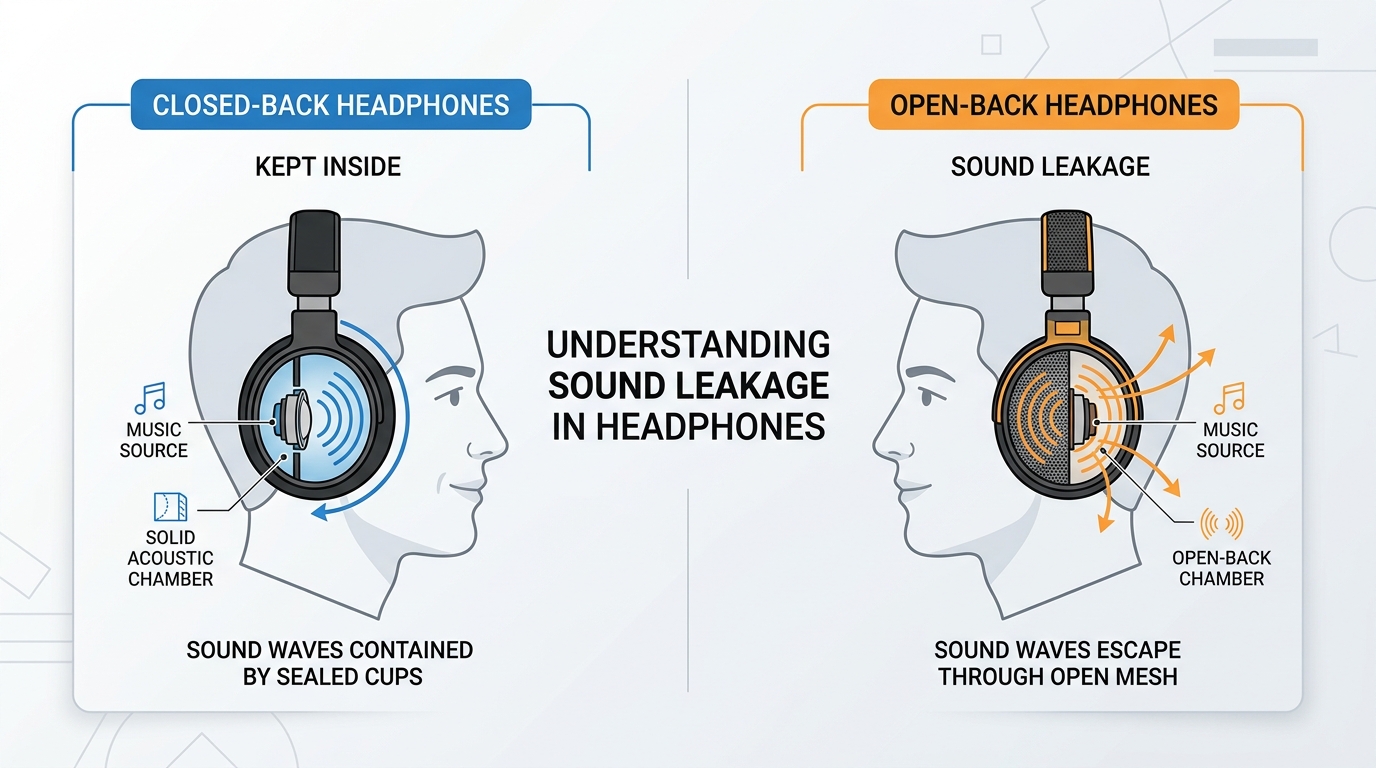
To understand why open-back headphones are a controversial choice for the office, we must first look at how they are constructed. Most consumer headphones—from standard earbuds to studio monitors—are “closed-back.” This means the outer shell of the earcup is completely sealed with solid plastic, wood, or metal. The sealed chamber blocks outside noise from entering and prevents your music from escaping.
In contrast, open-back headphones feature earcups with a mesh, grill, or perforated back. This design allows air and sound to pass freely through the earcups. While this acoustic transparency eliminates the boxed-in feel of closed-back models, it creates two major side effects that directly impact office life: sound leakage and zero noise isolation.
If you want to explore more about various headphone types and their designs, you can browse our comprehensive headphones category for detailed guides.
The Advantages of Open-Back Headphones in an Office
While the open design presents challenges, it is not without significant benefits. In fact, for certain office workers, open-back headphones offer advantages that closed-back models simply cannot match. Let’s look at the primary benefits:
- Unmatched Soundstage and Audio Quality: Because air flows freely, sound waves do not reflect off the back of the earcup. This creates a highly natural, “airy” soundstage where instruments feel like they are placed around you in a room rather than piped directly into your brain. For those who edit audio, produce video, or simply appreciate high-fidelity music while working, the sound quality is unparalleled.
- Superior Temperature and Pressure Regulation: Closed-back headphones trap heat and humidity, leading to sweaty ears and discomfort during multi-hour work sessions. Open-back designs allow your ears to “breathe,” maintaining a cool temperature and avoiding the physical fatigue associated with closed earcups.
- Natural Situational Awareness: In an office, being completely cut off from your environment can be a disadvantage. With open-back headphones, you can easily hear if a colleague calls your name, a phone rings, or someone approaches your desk. This prevents the “startle effect” that often occurs when someone taps on the shoulder of a closed-back headphone user.
- Reduced Voice Amplification: When you speak with closed-back headphones on, your own voice sounds muffled and boomed in your head (the occlusion effect), often causing you to talk louder than necessary. Open-back headphones let you hear your own voice naturally, which is highly beneficial during Zoom calls or quick desk conversations.
The Disadvantages: Why Open-Backs Can Fail the Office Test
Despite their benefits, the acoustic transparency of open-back headphones is a double-edged sword. In a shared workplace, these disadvantages often outweigh the pros:
- The Sound Leakage Dilemma: Because the back of the cup is open, sound leaks out almost as loudly as it plays inside. If you listen to music at moderate to high volumes, your cubicle neighbors will hear your music, podcasts, or client calls. This can be highly distracting to others and raise privacy concerns.
- Zero Passive Noise Isolation: Just as sound leaks out, ambient office noise leaks in. The clacking of mechanical keyboards, the hum of the air conditioner, coworkers gossiping, and printer noises will all pass directly into your ears. To drown out these noises, you may feel compelled to turn up the volume, which in turn causes even more sound leakage.
- Hearing Damage Risk: Raising your music volume to mask office noise is a dangerous habit that can lead to permanent hearing damage. Because open-backs offer no barrier to external noise, they are not suited for loud work environments.
Measuring the Noise: How Loud Are Open-Back Headphones?
To put this into perspective, let’s look at the decibel levels of sound leakage. A typical quiet office has an ambient noise floor of around 40 to 45 decibels (dB). In comparison, normal conversation is about 60 dB. Below is a visual representation of how sound leaks from open-back headphones compared to closed-back designs at various distances, measured while playing music at a moderate listening level of 75 dB.
As shown in the graph, at a distance of 1 foot (e.g., a colleague sitting right next to you), open-back headphones leak sound at around 60 dB, which is as loud as a normal conversation and easily audible. Even at 6 feet, the leakage is around 38 dB, which is audible in a quiet room. Closed-back headphones, on the other hand, drop to a completely silent level at just a few feet away, making them virtually imperceptible in standard office conditions.
Evaluating Your Office Environment
Whether open-back headphones are a good idea depends heavily on your specific workplace layout and office culture. Let’s evaluate the three most common office environments:
1. The Open-Plan Office
Verdict: A Bad Idea. Open-plan offices are designed for collaboration but are notorious for noise. If you wear open-back headphones here, you will be forced to turn them up to block out the conversations around you, which means your colleagues will hear everything you are listening to. This can make you the office nuisance and compromise your professional image.
2. Private Office or Cubicle with High Partitions
Verdict: Feasible (With Caution). If you have your own walled office or work in a spacious cubicle where your nearest coworker is more than 6-10 feet away, open-back headphones are viable. At this distance, the leaked sound will likely blend into the ambient office noise, especially if you keep your volume at a moderate level.
3. Shared or Coworking Spaces
Verdict: Not Recommended. Coworking spaces often have strict etiquette regarding noise. Because you are sharing tables and desks with strangers, any sound leakage is highly noticeable and discouraged. Closed-back or active noise-canceling headphones are much better suited for these environments.
Open-Back vs. Closed-Back Comparison
To help you decide which configuration works best for your professional routine, here is a detailed breakdown comparing the two designs side by side. For deeper comparisons of specific headphone models, head over to our dedicated comparison category.
| Acoustic Feature | Open-Back Headphones | Closed-Back Headphones |
|---|---|---|
| Sound Leakage | High (Audible to colleagues nearby) | Minimal (Contained within earcups) |
| Ambient Awareness | Excellent (You can hear external conversations) | Poor (Isolates you from the room) |
| Passive Isolation | None (Office noise passes through) | Moderate to High (Blocks hums and chatter) |
| Soundstage & Clarity | Exceptional, wide, natural sound | Narrower, boxed-in, bass-focused |
| Ear Comfort & Heat | Excellent (Cool, breathable, low fatigue) | Warm (Can cause sweat and pressure build-up) |
| Ideal Workspace | Private office, quiet home office | Open-plan office, commuting, noisy rooms |
Best Practices for Wearing Open-Back Headphones at Work
If you are determined to use open-back headphones in the office, following these etiquette rules will help you avoid conflicts with your coworkers:
- Keep the Volume Low: Stick to the 50% volume rule. If you can hear your music when holding the headphones at arm’s length, it is too loud for the office.
- Do a Leak Test: Put on your headphones at your normal volume, step away from your desk, and ask a colleague if they can hear anything. Testing it beforehand shows respect for your colleagues’ workspace.
- Switch During Peak Hours: Use your open-backs early in the morning or late in the evening when the office is less crowded, and switch to closed-backs or earbuds during busy hours.
- Avoid Sensitive Content: If you are listening to private voice messages, confidential client calls, or personal podcasts, swap to a closed-back option to maintain security and privacy.
The Verdict: Is It a Good Idea?
Ultimately, wearing open-back headphones in a shared office environment is not a good idea for most professionals. While the audio fidelity and comfort are top-tier, the lack of noise isolation and the high potential for sound leakage make them socially disruptive in open-plan offices and coworking spaces.
However, if you work in a quiet private office or have a spacious desk arrangement with minimal foot traffic, open-back headphones can be an exceptional tool to elevate your focus and auditory comfort. For everyone else, investing in a high-quality pair of closed-back or active noise-canceling (ANC) headphones remains the most professional and practical choice.
Discuss more about this, FAQ, Announcements and Miscellaneous, over on our community.
