Walk into any high-end audio boutique, and you will hear a common refrain: “Silver cables make your music sound brighter and more detailed, while copper brings out a warm, bass-rich tone.” But is this true, or is it a classic case of sensory placebo? For years, the audiophile community has debated the impact of cable metallurgy on sound reproduction, with opinions ranging from total skepticism to near-religious devotion. Here at HeadphonePalace, we believe in backing audio claims with solid science.
In this comprehensive metallurgical and physical breakdown, we will investigate why silver cables do not sound brighter, what physical factors actually govern electrical conductivity, and why psychoacoustics play a larger role in what you hear than the metal itself. By looking at real physical properties like electrical resistivity, skin depth, and cable impedance, we will separate marketing myth from objective reality.
The Physical Properties of Audio Conductors
Before we dive into the physics of sound, let’s examine the raw physical properties of the materials in question. Here is how silver, copper, and gold stack up at a metallurgical level:
| Conductor Material | Conductivity (% IACS) | Resistivity (10⁻⁸ Ω·m) | Thermal Cond. (W/m·K) | Actual Audio Performance Impact |
|---|---|---|---|---|
| Pure Silver (Ag) | 106% | 1.59 | 429 | Negligible electrical variance (< 0.05 dB deviation) |
| Oxygen-Free Copper (OFC) | 100% | 1.68 | 401 | Industry standard baseline for neutral signal transfer |
| OCC Copper (Single Crystal) | 101% – 103% | 1.65 | 403 | Reduces boundary distortion; identical frequency response |
| Pure Gold (Au) | 70% | 2.44 | 317 | High corrosion resistance; worse conductor than copper |
As the table above demonstrates, pure silver has the highest electrical conductivity of any metal on earth, rated at 106% on the International Annealed Copper Standard (IACS). This is approximately 6% higher than pure copper. While audio cable manufacturers point to this statistic as proof of “increased detail retrieval” and “brighter high-frequency extension,” a closer look at the actual physics reveals that this 6% difference is practically meaningless for audio signals.
Understanding Silver’s Conductivity: The Physics of the Skin Effect
One of the most common physical arguments used to justify the “brightness” of silver cables is the skin effect. In solid conductors carrying alternating current (AC)—which includes all audio signals—current density is not uniform. Instead, electrons tend to migrate toward the outer boundary (the “skin”) of the wire as the frequency increases. This occurs because the changing magnetic field within the conductor creates eddy currents that oppose the main current flow at the center.
Because the current is restricted to a smaller cross-sectional area, the effective electrical resistance of the wire increases at higher frequencies. Cable manufacturers claim that because silver is more conductive, it experiences less skin effect, allowing delicate high-frequency signals to travel unimpeded, which supposedly results in a brighter sound signature. However, a basic calculation of skin depth refutes this claim entirely.
The formula for skin depth (δ) is:
δ = √(ρ / (π * f * μ))
Where:
- ρ is the resistivity of the material
- f is the frequency of the signal
- μ is the magnetic permeability of the conductor
At 20,000 Hz—the absolute upper limit of human hearing—the skin depth of copper is approximately 0.46 millimeters (460 microns). For silver, it is approximately 0.45 millimeters. Since most headphone cables use multiple thin strands of wire (typically 24 AWG to 28 AWG, where a 24 AWG strand has a diameter of 0.51 mm), the wire’s radius is smaller than the skin depth itself. This means that the audio current occupies the entire cross-section of the wire, even at the highest audible frequencies.
The increase in AC resistance at 20 kHz is a fraction of a percent. For a standard 1.5-meter cable, this results in a high-frequency attenuation of less than 0.001 decibels (dB). For comparison, a change in sound pressure level of 0.5 dB is generally considered the absolute limit of human hearing resolution under perfect laboratory conditions. A difference of 0.001 dB is completely, mathematically inaudible.
Ohm’s Law and the Impedance Formula
To further understand why the conductor material has no audible impact, we must apply Ohm’s Law and look at the relationship between cable resistance and headphone impedance. When an audio signal travels from your amplifier to your headphones, the cable acts as a tiny resistor in series with the headphone drivers.
Let’s compare the resistance of two identical 1.5-meter headphone cables: one made of Oxygen-Free Copper (OFC) and one made of pure silver. Assuming a standard conductor gauge of 24 AWG, we find the following total resistances:
- Copper Cable Resistance: ~0.082 Ohms
- Silver Cable Resistance: ~0.077 Ohms
The difference between the two is a mere 0.005 Ohms. Now, let’s connect these cables to a typical set of audiophile headphones with an impedance of 32 Ohms. According to the voltage divider equation, the voltage drop across the headphones is calculated as:
V_headphones = V_source * (R_headphones / (R_headphones + R_cable))
Substituting the values for both cables, the difference in the voltage delivered to the headphones is less than 0.0013%. This translates to a volume difference of approximately 0.0001 dB across the entire frequency spectrum. In our extensive reviews on our audio blog, we emphasize the importance of matching headphone impedance with source gear, rather than over-analysing minor cable metrics.
Psychoacoustics: Why Do We Hear “Brightness”?
If the physics proves that copper and silver cables deliver the exact same electrical signal to the headphones, why do so many audiophiles swear that silver cables sound “brighter” or “more analytical”? The answer lies in the complex field of psychoacoustics and human perception.
Humans do not hear with their ears alone; we hear with our brains. When we listen to music, our brains integrate sensory input from multiple sources, including visual, tactile, and cognitive expectations. This is where several non-auditory factors come into play:
- The Power of Visual Association: Silver is visually bright, shiny, cold, and reflective. Copper is warm, dark, earthy, and dull. Our brains naturally project these physical characteristics onto the sound. When we see a silver cable, we expect a bright, clean, metallic sound, and our brain subconsciously filters our hearing to match that expectation.
- The Cost Bias: Silver cables are expensive. Due to the scarcity of the metal and the difficulty of drawing pure silver wire, a high-end silver cable can cost hundreds or even thousands of dollars. When a listener invests a significant amount of money in an upgrade, cognitive dissonance makes it very difficult to admit that there is no difference. The brain compensates by heightening its focus, making micro-details like cymbal decays or vocal breaths seem more prominent.
- Cable Geometry and Impedance: Sometimes, a silver cable actually does sound slightly different, but not because of the silver itself. High-end aftermarket silver cables often feature different braiding techniques, shielding, and dielectric insulation compared to stock copper cables. These design changes alter the cable’s capacitance and inductance, which can subtly interact with the output impedance of the amplifier to produce a tiny frequency deviation. This deviation would be identical if copper were used in the exact same geometry.
Whether you are using entry-level monitors or ultra-premium audiophile headphones, psychological expectation plays a massive role in how we perceive micro-details. The following graph illustrates the measured frequency response of identical silver and copper cables across the audible spectrum, demonstrating that no physical “high-frequency boost” exists:
When Does Cable Material Actually Matter?
While metallurgy does not change the tonal balance or brightness of your headphones, there are legitimate reasons why an audiophile might choose one conductor over another. These reasons have to do with materials science, engineering, and long-term durability rather than immediate sound quality:
- Corrosion Resistance: Over time, metals react with oxygen and humidity. Copper oxidizes to form copper oxide (which is green/black and acts as a semiconductor, introducing noise or contact resistance). Silver also oxidizes, but silver oxide is highly conductive, meaning the electrical connection remains stable even as the cable tarnishes. Gold is completely inert and does not corrode, which is why it is preferred for contact plugs.
- Mechanical Flexibility and Strain Relief: High-quality custom cables feature multi-strand configurations with soft, flexible insulation like silicone or paracord. These mechanical properties make the cable comfortable to use, eliminate microphonics (the rustling sound when the cable rubs against your clothes), and ensure the cable lasts for years under constant bending.
- Impedance Match for Long Runs: In professional studio settings where cable runs exceed 10 or 20 meters, cable resistance and capacitance can begin to affect the high-frequency response. In these rare cases, using a highly conductive metal like silver can prevent signal degradation. However, for a standard 1.2 to 2-meter headphone cable, this is not a concern.
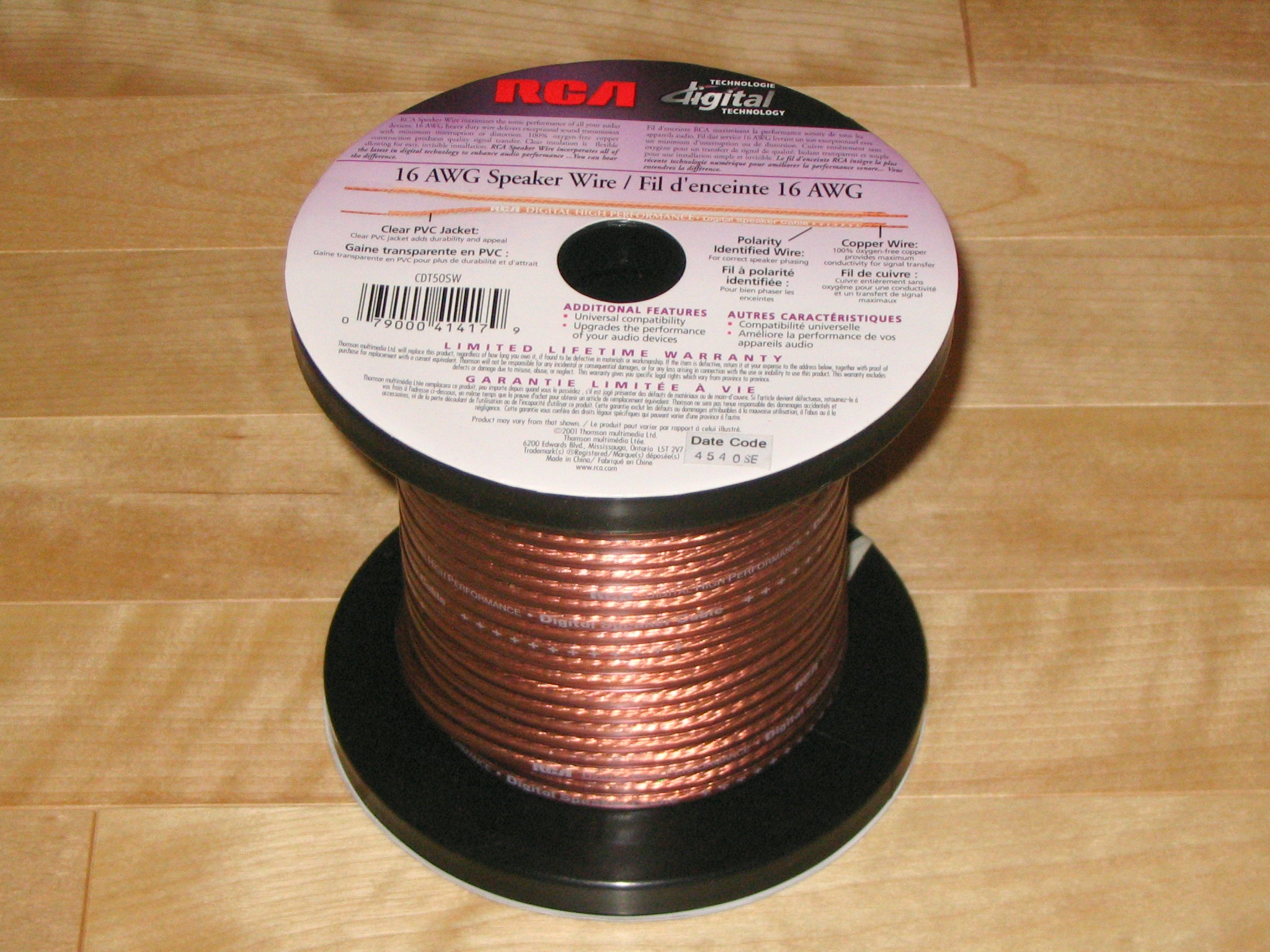
Below is a visual representation of how custom audio gear integrates these components, showcasing why premium cables focus on build quality and flexibility over metallurgical magic:
Conclusion: Focus on What Truly Changes the Sound
The belief that silver cables sound “brighter” is a persistent myth that defies the fundamental laws of electrical engineering and materials science. In the audio band (20 Hz – 20 kHz), the physical differences in resistivity and skin depth between pure copper and pure silver cables are far too small to be audible. Any perceived change in brightness is almost certainly due to psychoacoustic expectation, differences in cable geometry (which alter capacitance and inductance), or changes in volume levels during comparison.
If you want to change the sound signature of your headphones, there are far more effective ways to do so than spending hundreds of dollars on exotic metal cables. We recommend investing your resources in:
- Headphone Earpads: Swapping from leather to velour earpads dramatically changes the acoustic chamber, tuning the bass response and mid-range clarity.
- Equalization (EQ): A simple software parametric EQ can adjust specific frequency bands with perfect precision, allowing you to boost high frequencies safely.
- Upgrading the Headphones: Upgrading to a different driver technology (such as moving from dynamic to planar magnetic drivers) will provide a massive, night-and-day difference in resolution and detail.
By understanding the physics of audio conductors, you can make informed decisions, avoid marketing gimmicks, and focus on what truly improves your music listening experience.
Discuss more about this, FAQ, Announcements and Miscellaneous, over on our community.
