Headband clamp force is one of the most critical yet frequently overlooked physical variables in electroacoustic reproduction. In circumaural and supra-aural headphones, the mechanical clamping pressure exerted across the listener’s temporal and parietal bones dictates both physical wearing comfort and the fundamental integrity of the acoustic seal. When clamp pressure is excessively tight, listening fatigue and localized cranial pressure points manifest within minutes; conversely, insufficient clamp pressure introduces microscopic air leaks between the earpad cushion and facial contours, causing catastrophic sub-bass cancellation through acoustic short-circuiting.
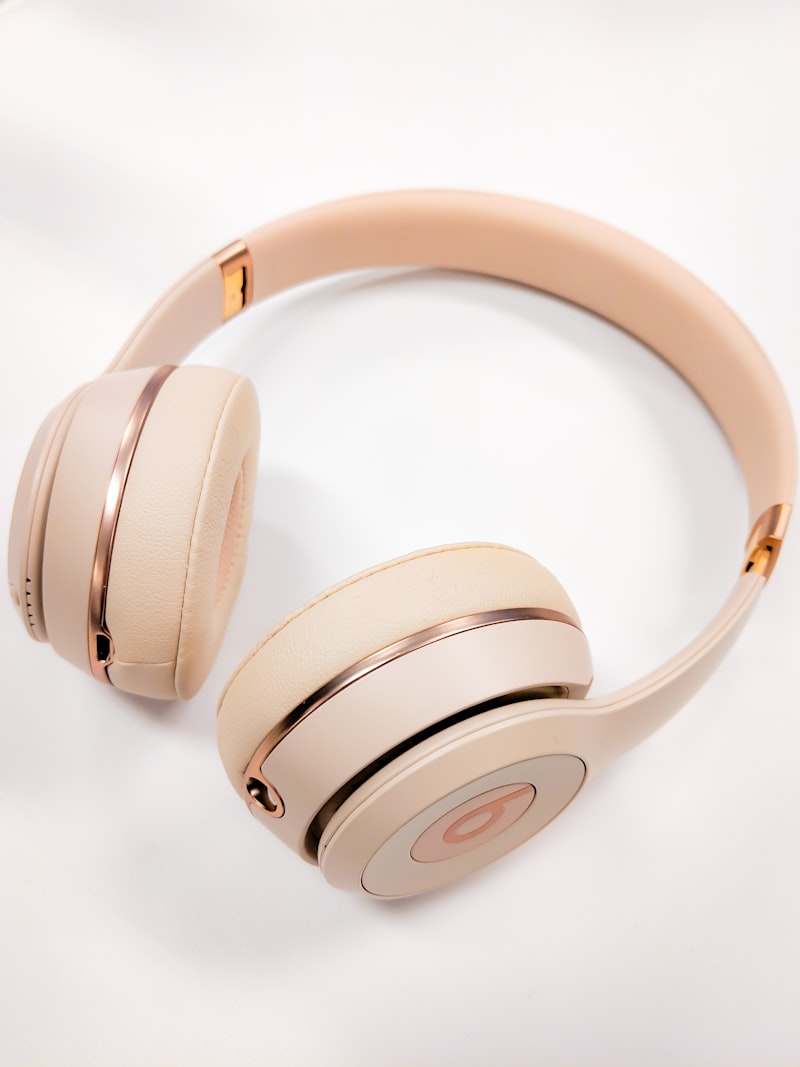
Many flagship studio and audiophile headphones utilize tempered spring steel bands within their primary arch structure. Understanding the mechanical metallurgy of spring steel—specifically the distinction between elastic deflection and plastic deformation—allows listeners to safely reshape their headbands without inducing localized metal fatigue, metallurgical work hardening, or structural failure. In this comprehensive engineering guide, we dissect the solid mechanics of clamp force calibration and its direct acoustic impact on low-frequency transducer coupling, as featured in our headphones technical breakdown.
Metallurgical Mechanics: Elastic Deflection vs. Plastic Deformation
Spring steels (such as high-carbon alloys AISI 1075, AISI 1095, or tempered austenitic stainless grades like 301 full-hard) are selected by acoustic engineers for their exceptionally high yield strength (σy ≈ 1,000 to 1,400 MPa) and elevated elastic limit. Under normal wearing conditions, stretching a headphone across the head operates strictly within the elastic deformation regime defined by Hooke’s Law:
σ = E · ε
Where σ represents the applied bending stress, E is Young’s Modulus of Elasticity (≈ 200 to 210 GPa for carbon steels), and ε is the mechanical strain. In this reversible elastic zone, releasing the outward stress allows the steel arch to return instantaneously to its original manufactured radius. Therefore, simply flexing a headband within its normal expansion range will produce zero permanent change in clamping force.
To permanently reshape a spring steel headband, the applied bending moment must deliberately exceed the material’s yield strength (σy) to enter the plastic deformation regime, while remaining well below the ultimate tensile strength (σuts) to prevent catastrophic fracturing or brittle yield. Bending stress across an arch cross-section is governed by the classical flexure formula:
σ = (M · y) / I
Where M is the applied bending moment, y is the perpendicular distance from the neutral axis to the outermost fiber, and I is the area moment of inertia. The primary hazard during manual reshaping is concentrating the bending moment across a single pinpoint fulcrum (such as pressing hard over a single finger). Concentrated localized strain triggers rapid cold-work hardening, creating an irreversible kink, micro-fracturing along the outer crystalline grain boundaries, and permanent loss of structural compliance.
Acoustic Coupling: Clamp Force (N) vs. Sub-Bass Transfer (dB at 40Hz)
The relationship between lateral clamping force and acoustic bass response is governed by acoustic impedance and sealed chamber pressurization. When an earpad is compressed against the head, the compliant foam ring and leather or velour outer skin deform to create an airtight seal around the periorbital and temporal areas. This creates an isolated front acoustic cavity connecting the transducer diaphragm to the ear canal entrance.
If lateral clamping force drops below approximately 2.5 Newtons (N), the pad material cannot sufficiently conform to anatomical crevices (such as the hollow beneath the zygomatic arch or gaps behind the jawline). The resulting air gap forms an acoustic leak resistance path in parallel with the ear canal impedance. Because acoustic volume velocity at low frequencies (20 Hz – 80 Hz) encounters this path of least resistance, sub-bass energy escapes rapidly into free air, introducing massive bass attenuation of up to -15 dB to -20 dB at 40 Hz.
Correlation between lateral headband force (Newtons) and low-frequency pressure retention (dB relative to sealed baseline)
As the electroacoustic measurement chart demonstrates, once clamping force reaches 3.8 N to 4.5 N, the earpad achieves total acoustic seal saturation. Increasing force beyond 6.0 N produces virtually zero additional low-frequency acoustic gain (< 0.3 dB), while exponentially increasing contact pressure (P = F / A) across cranial nerve pathways and crushing the pad foam. In severe cases, extreme over-clamping shifts the driver closer to the ear canal, inadvertently altering high-frequency pinna resonance notches.
Headband Architecture & Metallurgy Comparison
Before undertaking any physical modification, listeners must identify the exact structural composition of their headphone’s headband assembly. In our detailed comparison of headphone headband materials, structural behaviors vary dramatically across alloy formulations and hybrid composite frameworks:
| Headband Alloy / Core Material | Yield Strength (σy) | Elastic Modulus (GPa) | Ideal Clamp Target (N) | Reshaping Viability & Risk Profile |
|---|---|---|---|---|
| High-Carbon Spring Steel (AISI 1075 / 1095) | 1,100 – 1,350 MPa | 205 GPa | 3.5 – 4.8 N | High viability; requires deliberate, continuous radius flexing over cylindrical forms. |
| Austenitic Spring Stainless (AISI 301 Full Hard) | 1,250 – 1,450 MPa | 193 GPa | 3.8 – 5.0 N | Very high viability; highly ductile before rupture, excellent corrosion resistance. |
| Spring Manganese Steel (65Mn / 51CrV4) | 1,200 – 1,400 MPa | 210 GPa | 4.0 – 5.2 N | Moderate viability; strong elastic spring-back requires staged incremental counter-bending. |
| Steel Core Overmolded with ABS / Polycarbonate | Variable Composite | Variable | 3.2 – 4.5 N | High fracture risk; outer polymer shell will snap under cold bend unless internal steel band is exposed. |
| Nickel-Titanium Memory Alloy (Nitinol) | Superelastic Phase | 28 – 75 GPa | Factory Preset | Zero viability; phase transformation restores original shape; cannot be cold-reshaped. |
Step-by-Step Engineering Protocol: Safe Clamp Reshaping
To safely alter the radius of curvature on a bare or exposed spring steel headband without damaging delicate gimbal bearings, driver wiring, or plastic housings, follow this standardized workshop procedure:
- Phase 1: Mechanical Isolation: If possible, detach the earcups or slide the headband adjustment yokes to their maximum extension. Never apply bending torque directly through plastic swivel joints or yoke pivots, as plastic shear strength is less than 5% of spring steel’s tensile capacity.
- Phase 2: Radius Distribution (De-Clamping): To reduce excessive clamp force, place the thumbs against the apex of the steel arch (at least 5 to 8 cm apart) while pulling outward on the lower steel arms. Distribute the bending moment smoothly along the entire arc. Alternatively, flex the band gently across a broad, smooth cylindrical mandrel (such as a 15 cm diameter wooden form) to prevent localized kink formation.
- Phase 3: Controlled Reverse-Arched Flexing (Increasing Clamp): If clamp force is loose and leaking bass, cross the two headband arms over one another in an overlapping X-pattern, exerting gentle, distributed inward pressure to decrease the rest radius of the arch.
- Phase 4: Settling and Calibrated Measurement: Spring steels exhibit minor micro-relaxation immediately following plastic deformation. Allow the headband to rest for 15 minutes, then measure clamp force using a digital push/pull force gauge or by evaluating acoustic bass response on an acoustic test fixture.
Critical Hazards: What Never to Do
Three common amateur mistakes routinely destroy headphone headbands:
1. Thermal Annealing via Open Flame or Heat Guns: Attempting to heat spring steel with lighters or industrial heat guns destroys the heat-treated martensitic or tempered bainite microstructure. Exceeding 250°C anneals the steel, causing total loss of yield strength. The headband becomes soft and permanently loses all spring resilience.
2. Single-Point Acute Kinking: Bending the band over a sharp edge (such as a table corner) creates localized stress concentrations exceeding the shear failure threshold. This introduces permanent work-hardening micro-fractures, creating a weak spot prone to sudden snap under cyclic fatigue.
3. Long-Term Extreme Stretching over Books: Leaving headphones stretched wide over a stack of books for weeks induces room-temperature creep and degrades the elastic recovery of the foam earpads, permanently flattening the cushions without providing controlled, repeatable modification to the steel arch.
Engineering Conclusion: Achieving Acoustic & Ergonomic Balance
Calibrating spring steel headband clamp force is a precision mechanical adjustment that bridges ergonomic comfort with optimal acoustic performance. By understanding the yield strength boundaries of spring alloys and respecting the necessity of an airtight earpad seal, listeners can eliminate severe 40 Hz sub-bass roll-off while ensuring hours of fatigue-free listening. Explore more deep-dive audio engineering analysis across HeadphonePalace to maximize the fidelity, comfort, and longevity of your audiophile equipment.
Discuss more about this, FAQ, Announcements and Miscellaneous, over on our community.
