If you have ever ventured into forums, read a headphone review, or spoken to a self-proclaimed audio enthusiast, you have likely encountered terms that sound more suited to a physics lecture than a simple discussion about listening to music. Words like “soundstage,” “imaging,” and “timbre” are tossed around frequently, but what do they actually mean? And more importantly, why should you care?
In this guide, we are going to demystify these three foundational pillars of the audiophile vocabulary. Understanding these concepts will not only help you interpret reviews more effectively but also allow you to identify exactly what you value in a pair of headphones or speakers.
1. Soundstage: The Width and Depth of the Performance
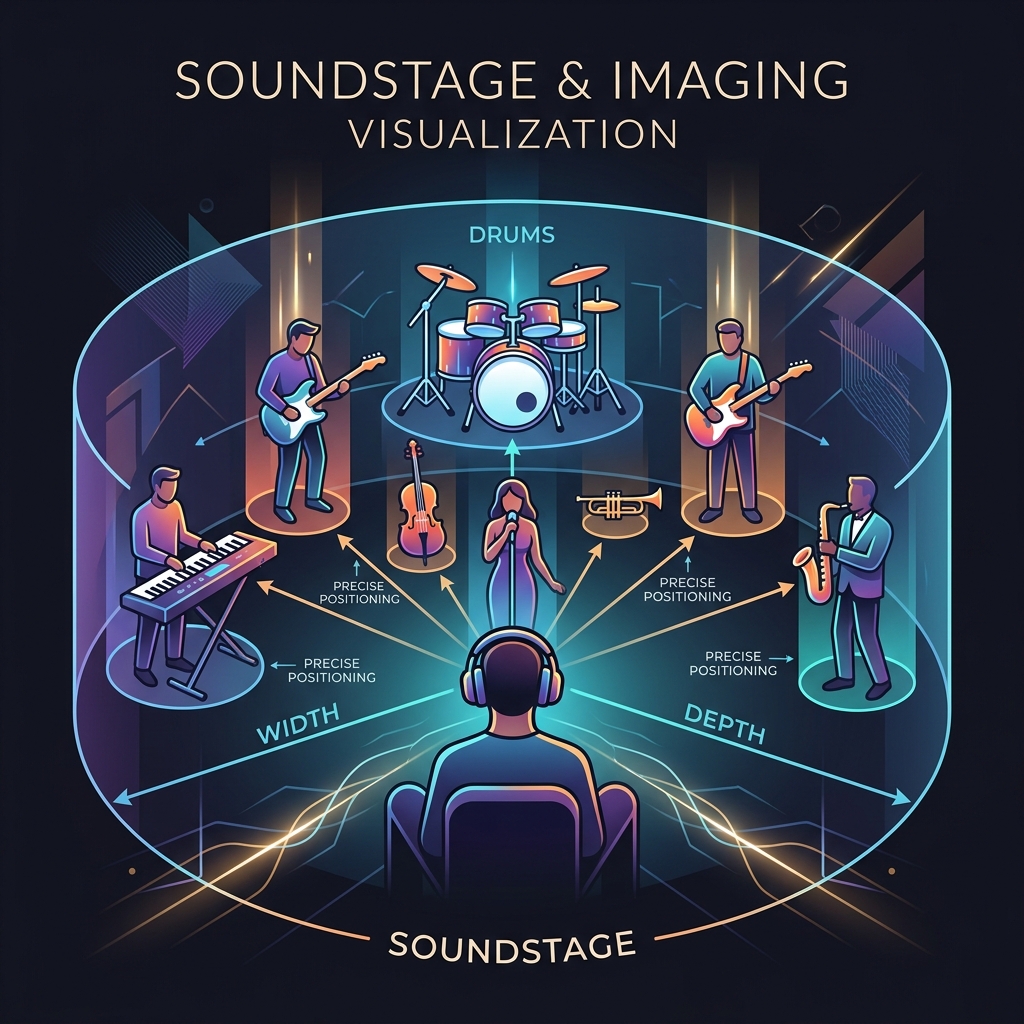
Imagine you are sitting in a concert hall. The band is playing on a stage in front of you. Soundstage refers to the perceived three-dimensional space created by your audio equipment. It is the illusion of width, depth, and sometimes height in the music you are listening to.
When headphones have a “wide soundstage,” the music sounds as if it is coming from outside your head, rather than being trapped between your ears. Open-back headphones are famously known for providing a wider and more natural soundstage compared to closed-back models, because they allow sound to escape and interact with the environment.
2. Imaging: Placing the Instruments
While soundstage defines the size of the room, imaging defines where everyone is standing inside that room. Imaging is the accuracy with which an audio setup can reproduce the location of individual instruments or vocalists within the soundstage.
If you close your eyes and listen to a track with excellent imaging, you should be able to point exactly to where the guitarist is playing on the left, where the drummer is seated in the back, and where the lead singer is standing dead center. Poor imaging, on the other hand, results in a “blob” of sound where everything blends together, making it difficult to distinguish individual elements.
3. Timbre: The Color of Sound
Timbre (pronounced tam-ber) is perhaps the most crucial but hardest to describe element of sound. It refers to the tonal quality or “color” of a sound that distinguishes one instrument or voice from another, even when they are playing the same note at the same volume.
For example, a middle C played on a piano sounds completely different from a middle C played on a violin. That difference in character is timbre. Audiophiles often talk about “natural timbre,” which means that the instruments sound exactly as they would in real life. Headphones with unnatural or artificial timbre might make a grand piano sound electronic, or make human vocals sound metallic or thin.
Comparing the Big Three
To help summarize these concepts, let us break them down into a quick reference table.
| Concept | Definition | What It Sounds Like |
|---|---|---|
| Soundstage | The perceived physical dimensions of the audio space. | The illusion of being in a small club vs. a massive stadium. |
| Imaging | The precise location of instruments within the soundstage. | Being able to point to where the bass guitar is playing. |
| Timbre | The unique tonal quality of an instrument or voice. | Knowing instantly whether you are hearing a cello or a viola. |
Why Does This Matter for You?
Understanding soundstage, imaging, and timbre is essential when upgrading your audio gear. If you are a competitive gamer, precise imaging is critical for hearing enemy footsteps. If you love orchestral music, a wide soundstage and natural timbre will make the experience incredibly immersive. By knowing these terms, you can cut through the marketing fluff and choose the headphones that perfectly match your listening preferences.
Next time you put on your favorite track, take a moment to analyze these three aspects. You might just discover a whole new dimension to the music you love.
Discuss more about this, FAQ, Announcements and Miscellaneous, over on our community.
