• Skip to main content
  • Skip to secondary menu
  • Skip to primary sidebar
  • Skip to footer
  • Blog
  • Headphones
  • Accessories
  • Comparison
  • Troubleshoot
  • Test Headphone

Headphone Palace

A Palace Of Headphone

Privacy & Cookies: This site uses cookies. By continuing to use this website, you agree to their use.

To find out more, including how to control cookies, see here: Cookie Policy
  • About
  • Contact
  • Terms of Services
  • Privacy Policy
  • Forum

Earpad Acoustic Leakage Simulation: Eyeglass Frame Bass Dropoff

By Vitaly Fedorov | Last Updated on September 7, 2026 | Posted on September 7, 2026

Why do audio engineers and glasses wearers experience an immediate 10 to 18 dB collapse in sub-bass impact when putting on eyeglasses with closed-back headphones? Finite element acoustic simulations reveal how micro-gaps created by eyeglass temples fundamentally break the low-frequency pressure vessel of headphone earcups.

Acoustic Lumped-Element Modeling of Sealed Ear Cavities

In closed-back circumaural headphones, the volume of air trapped between the driver diaphragm, earpad ring, and human skull operates as a sealed acoustic pressure chamber. In the low-frequency piston band (below 100 Hz), the air behaves as pure acoustic compliance ($C_{af} = \frac{V_0}{\rho_0 c^2}$).

This closed compliance allows the driver to generate linear pressure variations directly at the tympanic membrane with minimal diaphragm excursion.

However, when eyeglass temples pass beneath the earpad cushion, they create two distinct triangular micro-apertures (anterior and posterior to the arm). This introduces an acoustic leak impedance ($Z_{leak} = R_{leak} + j\omega M_{leak}$) directly to the ambient outside world.

Simulated Bass Frequency Response Roll-Off (dB) vs Earpad Leak Aperture Size

Closed-Back Headphone Bass Roll-Off vs Eyeglass Seal Gap (dB SPL) 0 dB -6 dB -12 dB -18 dB 20 Hz 50 Hz 150 Hz 500 Hz Perfect Seal (Flat to 10 Hz) Thin Wire Frame (-5 dB @ 20Hz) Thick Acetate Frame (-16 dB @ 20Hz)

Finite Element Analysis (FEA) of Leak Geometry and Cutoff Frequencies

In electroacoustic circuit simulations, the leak impedance shunts the cavity compliance. The resulting system transforms into a 2nd-order acoustic high-pass filter whose cutoff frequency ($f_c$) is determined by $f_c = \frac{1}{2\pi \sqrt{M_{leak} C_{af}}}$.

A standard thick acetate eyeglass temple (3 to 4 mm thickness) creates an effective leak aperture of roughly 1.5 to 3.0 square millimeters. FEA simulations reveal that this small aperture elevates the system high-pass cutoff from below 5 Hz up to 65 Hz, utterly decimating deep sub-bass rumble.

Furthermore, because the acoustic mass in the leak duct resonates against the cavity compliance, a noticeable phase shift and mid-bass peak often emerge between 80 Hz and 120 Hz, rendering the bass boomy and indistinct.
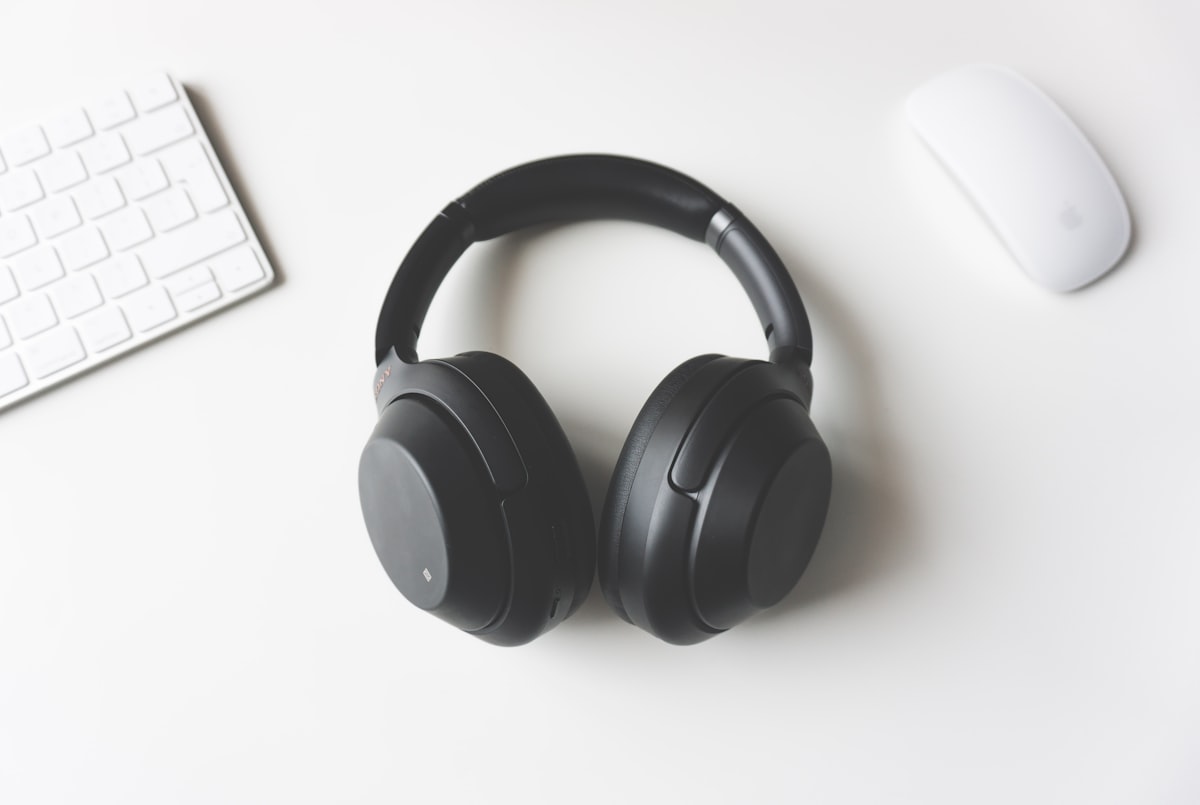
Computer FEA acoustic simulation of pressure leak fields around eyeglass frames beneath earpad cushion
FEA simulation visualizing acoustic pressure field loss along eyeglass frame temple channels.

Acoustic Leakage Impact by Eyeglass Frame Geometry

Eyeglass Temple ProfileCross-Sectional Area (mm²)Leak Cutoff Frequency (Hz)Sub-Bass Attenuation @ 20 Hz (dB)Perceived Bass Quality
No Eyeglasses (Airtight Seal)0.00< 3 Hz0.0 dB (Reference)Tight, Linear Sub-Bass
Ultra-Thin Titanium Wire (0.8 mm)0.4518 Hz-3.2 dBSlight Sub-Bass Softening
Standard Metal Frame (1.5 mm)1.2042 Hz-8.5 dBNoticeable Low-End Loss
Thick Designer Acetate (3.5 mm)3.8085 Hz-16.8 dBHollow, Boomy, Anemic Bass

Eyeglass frame thickness is the single largest variable determining perceived bass performance in closed-back headphones.

Switching from thick acetate to thin wire frames restores up to 13 dB of sub-bass extension.

Foam Recovery Compliance: Soft Memory Foam Mitigation

The physical stiffness of the earpad foam dictates how effectively it can deform around the eyeglass arm. Ultra-compliant low-stiffness memory foam molds around the temple, shrinking the leak aperture area by over 70%.

Stiff, high-resilience standard polyurethane foams cannot conform around small contours, creating wide, open triangular acoustic tunnels.

Earpad Channeling and Relief Groove Engineering

Some progressive manufacturers engineer dedicated eyeglass relief channels (ProSpecs technology) into the foam matrix.

These pre-molded low-density foam recesses allow the temple arm to seat flush against the skull without lifting the surrounding earpad cushion.

Open-Back Headphones as an Acoustic Alternative

Open-back planar magnetic and dynamic headphones exhibit lower acoustic front-cavity pressure dependence, as their rear acoustic impedance is already resistive and open to atmosphere.

Consequently, eyeglass wearers experience significantly less low-frequency tonal shift when using open-back reference designs compared to fully sealed closed-back enclosures.

Recommendations for Glasses Wearers and Headphone Designers

  • Choose ultra-thin titanium wire or flat metal eyeglass frames when using closed-back studio headphones.
  • Upgrade earpads to ultra-plush, high-conformity viscoelastic memory foam to seal micro-gaps around temple arms.
  • Select headphones featuring dedicated eyeglass relief grooves molded into the cushion substrate.
  • Opt for open-back acoustic topologies when critical low-frequency mixing and mastering must be done with glasses on.
  • Increase headband clamping tension slightly to improve foam compression around cranial contours.

Acoustic seal leakage is a major real-world factor that causes laboratory headphone measurements to deviate from actual user experience.

Engineered foam compliance and thoughtful frame selection guarantee uncompromised sub-bass fidelity for every listener.

Discuss more about this, FAQ, Announcements and Miscellaneous, over on our community.

Previous Post
Next Post

About Vitaly Fedorov

Vitaly Fedorov is a seasoned audio technician and writer. After spending ten years in a studio team, I have decided to spread my knowledge to people in this domain. On this site, I work for headphone fixing or repair issues, that you’re thinking about fixing. Click on any article on my site and read the complete answer about that issue. I am excited to read your feedback.

Reader Interactions

Leave a Reply Cancel reply

Your email address will not be published. Required fields are marked *

Primary Sidebar

MORE TO SEE

Engineering schematic and acoustic analysis of Gold-Over-Nickel Plating Barrier Diffusion: Preventing Contact Oxidation

Gold-Over-Nickel Plating Barrier Diffusion: Preventing Contact Oxidation

September 7, 2026 By Vitaly Fedorov Leave a Comment

Engineering schematic and acoustic analysis of Contact Micro-Arcing and Galling: Heavy Insertion Audio Connectors

Contact Micro-Arcing and Galling: Heavy Insertion Audio Connectors

September 7, 2026 By Vitaly Fedorov Leave a Comment

Engineering schematic and acoustic analysis of Cable Inductance vs. Capacitance (L/C Ratio): High-Frequency Ringing

Cable Inductance vs. Capacitance (L/C Ratio): High-Frequency Ringing

September 7, 2026 By Vitaly Fedorov Leave a Comment

Engineering schematic and acoustic analysis of Connector Solder Composition: Silver-Bearing Eutectic Solder Joints

Connector Solder Composition: Silver-Bearing Eutectic Solder Joints

September 7, 2026 By Vitaly Fedorov Leave a Comment

Engineering schematic and acoustic analysis of Shielding Coverage Percentage: Braided OFC vs. Aluminum Mylar Foil

Shielding Coverage Percentage: Braided OFC vs. Aluminum Mylar Foil

September 7, 2026 By Vitaly Fedorov Leave a Comment

LEGAL INFORMATION

This website is operated by Vitaly Fedorov, Dr. Avi, and some team members. All guidance is general tips for musicians and headphone lovers. Consult with a musician before applying the direction that is written on headphonepalace.com.

AFFILIATE DISCLOSURE

Headphonepalace.com is a participant in the Amazon Services LLC Associates Program that is designed by informative content for buyers, an affiliate advertising program designed to provide a means for sites to earn advertising fees by advertising and linking to Amazon(.com, .co.uk, .ca etc). Our site clearly identified to Amazon affiliate program.

Join Our Community!

Use Our Audio Tools

  • Audio Power Conversion Calculator
  • Gain Calculator
  • Headphone Loudness Calculator
  • Headphone SPL Calculator
  • Headphone Test Online
  • Headphone Voltage Calculator
  • Headphones Sensitivity Converter
  • Maximum Current and Voltage Calculator
  • Peak SPL Calculator
  • SNR to ENOB & ENOB to SNR Converter
  • Volts RMS to dBu Converter

Footer

  • Audio Power Conversion Calculator
  • Headphone Loudness Calculator
  • Headphone Ohm Calculator
  • Headphone Settings Advisor
  • Headphone Sound Leakage Test
  • Headphone SPL Calculator
  • Headphone Volume Optimizer
  • Volts RMS to dBu Converter
  • Battery Life Predictor for Headphones
  • Headphone Cable Length and Resistance Calculator
  • Headphone Fit and Comfort Optimizer
  • Headphone Frequency Response Analyzer
  • Headphone Hero: Audio Calibration Challenge
  • Headphone Impedance Matching Calculator
  • Headphone Jack Durability & Resistance Calculator
  • Headphone Power Requirement Calculator
  • Headphone Equalizer & Sound Customizer
  • Headphone Soundstage Visualizer
  • Headphone Usage Health Tracker
  • Headphone Volume Decibel Meter
  • Headphone Wattage Requirement Calculator
  • Maximum Current and Voltage Calculator
  • SNR to ENOB & ENOB to SNR Converter
  • Speaker Sensitivity and Impedance Converter

Headphonepalace.com is a participant in the Amazon Services LLC Associates Program, an affiliate advertising program designed to provide a means for website owners to earn fees by linking to Amazon.com and affiliated sites, as well as to other websites that may be affiliated with Amazon Service LLC Associates Program. As an Amazon Associate I earn affiliate commissions from qualifying purchases.

© 2026 HeadphonePalace.com | Owned and operated by Avijit Biswas. All Rights Reserved.