• Skip to main content
  • Skip to secondary menu
  • Skip to primary sidebar
  • Skip to footer
  • Blog
  • Headphones
  • Accessories
  • Comparison
  • Troubleshoot
  • Test Headphone

Headphone Palace

A Palace Of Headphone

Privacy & Cookies: This site uses cookies. By continuing to use this website, you agree to their use.

To find out more, including how to control cookies, see here: Cookie Policy
  • About
  • Contact
  • Terms of Services
  • Privacy Policy
  • Forum

Headphone Weight Distribution: Top-of-Head Pressure Point Physics

By Vitaly Fedorov | Last Updated on September 7, 2026 | Posted on September 7, 2026

Why can a heavy 450-gram planar magnetic headphone feel completely weightless on your head, while a light 240-gram plastic headset causes excruciating crown pain after forty minutes? The secret lies in contact surface area pressure distribution and cranial ergonomics physics.

Cranial Anatomy and Contact Surface Pressure Mechanics

The human cranial vault is covered by the galea aponeurotica, a dense fibrous connective tissue layer with minimal subcutaneous adipose padding. Directly beneath lie sensitive superficial nerves (including supraorbital and greater occipital nerve branches) and vascular capillary beds.

Mechanical pressure ($P$) is defined as force per unit area: $P = \frac{F}{A}$, where $F$ is gravitational weight plus clamping pre-load, and $A$ is the effective contact surface area between the headband and the crown of the head.

When a narrow headband (e.g., a 15 mm wide strip) rests on the skull, the effective contact area is merely 6 to 9 square centimeters. This concentrates the entire downward force into a localized pressure spike exceeding 15 to 25 kPa, quickly restricting capillary blood perfusion and triggering ischemic crown fatigue.

Cranial Contact Pressure (kPa) vs Suspension Strap Width (mm)

Crown Contact Pressure (kPa) vs Headband Width (mm) 25 kPa (Pain Zone) 12 kPa 0 kPa 10 mm 25 mm 50 mm 75 mm (Suspension) Comfort Equilibrium (< 4 kPa) Capillary Occlusion Pain Threshold (10 kPa)

Suspension Straps vs Padded Solid Arches Mechanics

To solve the pressure spike problem, ergonomic engineers implement hammock-style floating suspension straps. Unlike solid padded arches that focus weight on the apex of the skull, a flexible suspension strap conforms naturally to the curved sagittal profile of individual head shapes.

By expanding contact surface area from $8\text{ cm}^2$ to over $45\text{ cm}^2$, a 60 mm wide leather or textile strap disperses the downward force evenly across parietal and frontal bones.

This drops peak contact pressure from 18 kPa down to under 3.2 kPa—well below the 10 kPa capillary occlusion threshold—allowing even heavy 500-gram planar headphones to be worn comfortably for 8+ hours.
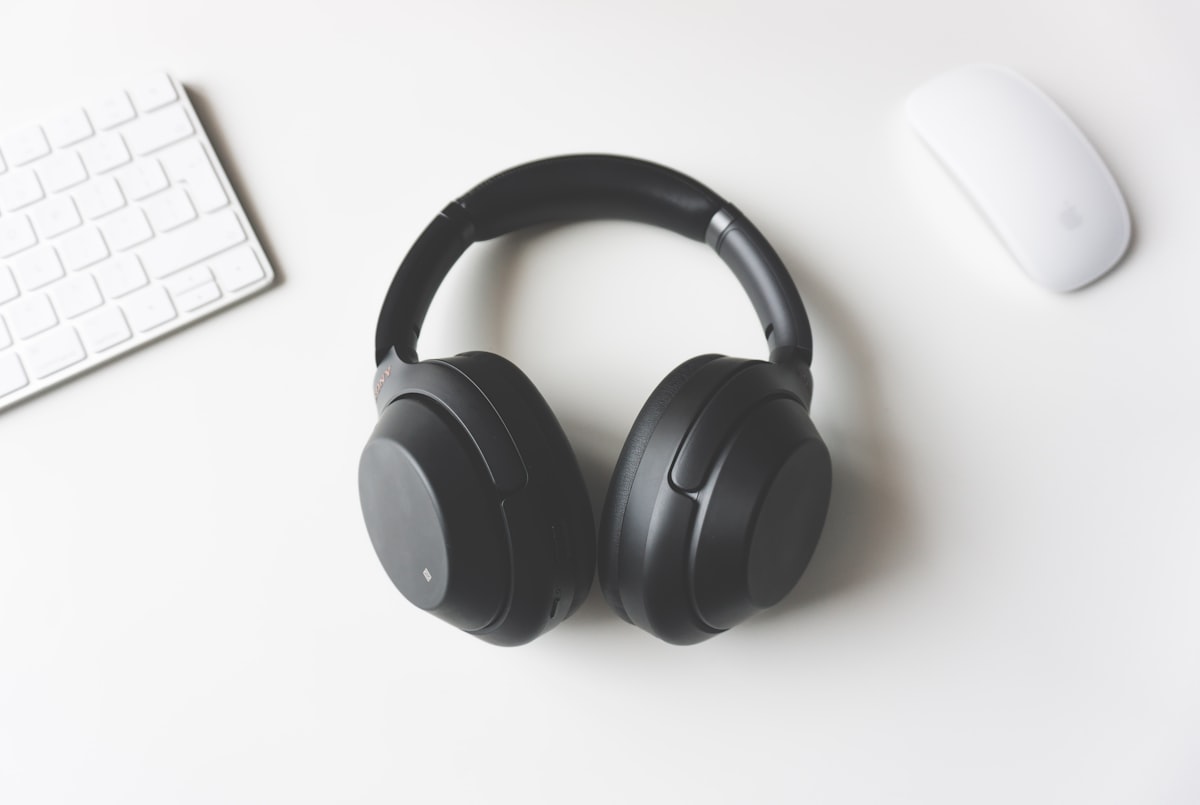
Wide leather hammock suspension headband distributing headphone weight across the skull
Ergonomic wide suspension strap distributing cranial pressure evenly to eliminate crown fatigue.

Headband Architecture and Cranial Pressure Metrics

Headband TopologyContact Surface Area (cm²)Peak Contact Pressure @ 400g (kPa)Capillary Occlusion RiskLong-Term Wear Comfort
Narrow Padded Plastic Strip (15 mm)7.522.5 kPaSevere (Pain in < 45 min)Very Poor
Split Dual-Cushion Headband16.011.2 kPaModerate (Apex relief)Fair-Good
Contoured Memory Foam Arch (35 mm)24.07.5 kPaLow (Acceptable)Good
Wide Floating Suspension Strap (65 mm)48.03.1 kPaZero (True weightlessness)Exceptional (All-day)

Expanding the effective contact area is exponentially more effective at improving comfort than merely reducing chassis mass.

Floating suspension bands adapt automatically to varying cranial radii without requiring manual adjustment.

Lateral Clamping vs Vertical Load Vector Equilibrium

Headphone weight support is a vector balance between vertical gravity load on the crown and horizontal clamping friction against the sides of the head.

By optimizing lateral earpad clamping force to 4.2 Newtons, friction against the temporal bones supports up to 35% of the total downward mass, further relieving crown pressure.

Center of Gravity (CoG) and Dynamic Rotational Inertia

If heavy planar drivers are positioned far outward from the head, the headphone polar moment of inertia increases ($I = m r^2$). This makes the headphone feel sluggish and prone to sliding off when tilting your head.

Keeping driver motors close to the cranial center of mass stabilizes rotational balance and eliminates neck muscle strain.

Breathable Perforated Leather and 3D Mesh Fabrics

Wide suspension straps can trap body heat and sweat against the scalp. Incorporating laser perforations or multi-layer 3D knitted mesh fabrics promotes convective airflow.

Cooling the crown area prevents thermal buildup and keeps skin tissue comfortable during marathon mixing sessions.

Best Practices for Headphone Weight Distribution

  • Specify wide (50–70 mm) flexible suspension straps to maximize cranial contact surface area.
  • Maintain peak crown contact pressure below 5 kPa to prevent capillary occlusion and pain.
  • Balance vertical weight distribution with 3.8 to 4.5 N of lateral earpad clamping friction.
  • Design driver placement tight to the skull to minimize polar moment of rotational inertia.
  • Incorporate perforated leather or 3D breathable mesh to prevent crown heat accumulation.

True headphone comfort is a triumph of mechanical geometry and pressure distribution physics rather than raw weight reduction alone.

Suspension ergonomics ensure that listeners remain immersed in their music without physical distraction.

Discuss more about this, FAQ, Announcements and Miscellaneous, over on our community.

Previous Post
Next Post

About Vitaly Fedorov

Vitaly Fedorov is a seasoned audio technician and writer. After spending ten years in a studio team, I have decided to spread my knowledge to people in this domain. On this site, I work for headphone fixing or repair issues, that you’re thinking about fixing. Click on any article on my site and read the complete answer about that issue. I am excited to read your feedback.

Reader Interactions

Leave a Reply Cancel reply

Your email address will not be published. Required fields are marked *

Primary Sidebar

MORE TO SEE

Engineering schematic and acoustic analysis of Gold-Over-Nickel Plating Barrier Diffusion: Preventing Contact Oxidation

Gold-Over-Nickel Plating Barrier Diffusion: Preventing Contact Oxidation

September 7, 2026 By Vitaly Fedorov Leave a Comment

Engineering schematic and acoustic analysis of Contact Micro-Arcing and Galling: Heavy Insertion Audio Connectors

Contact Micro-Arcing and Galling: Heavy Insertion Audio Connectors

September 7, 2026 By Vitaly Fedorov Leave a Comment

Engineering schematic and acoustic analysis of Cable Inductance vs. Capacitance (L/C Ratio): High-Frequency Ringing

Cable Inductance vs. Capacitance (L/C Ratio): High-Frequency Ringing

September 7, 2026 By Vitaly Fedorov Leave a Comment

Engineering schematic and acoustic analysis of Connector Solder Composition: Silver-Bearing Eutectic Solder Joints

Connector Solder Composition: Silver-Bearing Eutectic Solder Joints

September 7, 2026 By Vitaly Fedorov Leave a Comment

Engineering schematic and acoustic analysis of Shielding Coverage Percentage: Braided OFC vs. Aluminum Mylar Foil

Shielding Coverage Percentage: Braided OFC vs. Aluminum Mylar Foil

September 7, 2026 By Vitaly Fedorov Leave a Comment

LEGAL INFORMATION

This website is operated by Vitaly Fedorov, Dr. Avi, and some team members. All guidance is general tips for musicians and headphone lovers. Consult with a musician before applying the direction that is written on headphonepalace.com.

AFFILIATE DISCLOSURE

Headphonepalace.com is a participant in the Amazon Services LLC Associates Program that is designed by informative content for buyers, an affiliate advertising program designed to provide a means for sites to earn advertising fees by advertising and linking to Amazon(.com, .co.uk, .ca etc). Our site clearly identified to Amazon affiliate program.

Join Our Community!

Use Our Audio Tools

  • Audio Power Conversion Calculator
  • Gain Calculator
  • Headphone Loudness Calculator
  • Headphone SPL Calculator
  • Headphone Test Online
  • Headphone Voltage Calculator
  • Headphones Sensitivity Converter
  • Maximum Current and Voltage Calculator
  • Peak SPL Calculator
  • SNR to ENOB & ENOB to SNR Converter
  • Volts RMS to dBu Converter

Footer

  • Audio Power Conversion Calculator
  • Headphone Loudness Calculator
  • Headphone Ohm Calculator
  • Headphone Settings Advisor
  • Headphone Sound Leakage Test
  • Headphone SPL Calculator
  • Headphone Volume Optimizer
  • Volts RMS to dBu Converter
  • Battery Life Predictor for Headphones
  • Headphone Cable Length and Resistance Calculator
  • Headphone Fit and Comfort Optimizer
  • Headphone Frequency Response Analyzer
  • Headphone Hero: Audio Calibration Challenge
  • Headphone Impedance Matching Calculator
  • Headphone Jack Durability & Resistance Calculator
  • Headphone Power Requirement Calculator
  • Headphone Equalizer & Sound Customizer
  • Headphone Soundstage Visualizer
  • Headphone Usage Health Tracker
  • Headphone Volume Decibel Meter
  • Headphone Wattage Requirement Calculator
  • Maximum Current and Voltage Calculator
  • SNR to ENOB & ENOB to SNR Converter
  • Speaker Sensitivity and Impedance Converter

Headphonepalace.com is a participant in the Amazon Services LLC Associates Program, an affiliate advertising program designed to provide a means for website owners to earn fees by linking to Amazon.com and affiliated sites, as well as to other websites that may be affiliated with Amazon Service LLC Associates Program. As an Amazon Associate I earn affiliate commissions from qualifying purchases.

© 2026 HeadphonePalace.com | Owned and operated by Avijit Biswas. All Rights Reserved.