In the world of high-fidelity audio, audiophiles are constantly chasing the perfect synergy between their playback equipment and their transducers. When selecting a headphone amplifier, one of the most critical—yet frequently misunderstood—technical specifications is output impedance. This single specification plays a monumental role in shaping the final sound signature of your setup. Depending on whether you choose a solid-state amplifier or a vacuum tube design, the output impedance will interact with your headphones in drastically different ways. Understanding this interaction is key to building a cohesive, high-performing audio system.
In this comprehensive guide, we will dive deep into the physics of output impedance, contrast the design philosophies of solid-state vs. tube gear, and explore how these factors influence the headphones you love. Whether you are a seasoned audiophile or just getting started, mastering impedance matching will help you make more informed purchasing decisions.
What is Output Impedance? (The Basics)
Before comparing amplifier designs, we must define what output impedance actually is. In simple terms, output impedance (expressed in ohms, symbol Ω) is the internal electrical resistance of an amplifier’s output stage as seen by the headphones. You can think of it using a hydraulic analogy: the amplifier is a water pump, and the audio signal is the flow of water.
An amplifier with low output impedance acts like a wide, unrestricted pipe. It can deliver water (current) quickly and effortlessly, with very little resistance within the pump itself. On the other hand, an amplifier with high output impedance is akin to a pipe with a narrow nozzle or valve inside. The pump must work harder, and the resistance within the pump limits the flow rate of the water. In audio, this internal resistance determines how easily the amplifier can deliver current to the voice coils or drivers of your headphones.
The Damping Factor and the “1/8th Rule”
To understand how output impedance affects sound, we must introduce the concept of the damping factor. The damping factor is a dimensionless ratio calculated by dividing the nominal impedance of the headphones by the output impedance of the amplifier:
Damping Factor = Headphone Impedance / Amplifier Output Impedance
Damping is the amplifier’s ability to control the movement of the headphone driver. When an audio signal tells a headphone driver to move forward and then stop, the driver’s physical inertia causes it to keep moving slightly. As the voice coil moves through the magnetic field, it acts as a generator, creating a reverse electrical current known as “Back Electromotive Force” (Back EMF). An amplifier with very low output impedance acts as a short circuit for this Back EMF, immediately absorbing it and stopping the driver from vibrating unchecked. This leads to tight, controlled, and fast bass transients.
Conversely, if the output impedance is high, the Back EMF cannot be dissipated efficiently. The driver continues to vibrate on its own inertia, resulting in a loose, boomy, or muddy bass response. To avoid audible frequency response coloration and ensure adequate control, engineers adhere to the 1/8th Rule. This rule dictates that the nominal impedance of your headphones should be at least eight times higher than the output impedance of the amplifier driving them. For example, if you are using a pair of 32-ohm headphones, the amplifier’s output impedance should ideally be 4 ohms or less. If you use a 300-ohm headphone, the amplifier’s output impedance can be up to 37.5 ohms before violating the rule.
Solid-State Amplifiers: The Quest for Zero
In the modern audio era, solid-state amplifiers (which use silicon transistors like BJTs or MOSFETs) are the most popular choice for driving headphones. A defining characteristic of high-quality solid-state amplifiers is their extremely low output impedance, often measuring under 1 ohm, and sometimes as low as 0.01 ohms.
Solid-state designers employ negative feedback and robust output topologies to minimize output impedance. The primary benefit of this design philosophy is absolute transparency. By maintaining a high damping factor across the entire frequency range, a solid-state amplifier does not color the sound. The amplifier exerts absolute authority over the headphone drivers, ensuring that the frequency response you hear is exactly what the headphone manufacturer intended.
This transparency makes solid-state amplifiers highly versatile, particularly for low-impedance dynamic headphones and modern planar magnetics, which you can find discussed in detail under our headphones category. Whether you are driving sensitive in-ear monitors (IEMs) or demanding full-sized headphones, a low-impedance solid-state design ensures that the frequency response remains flat and the transients remain sharp.
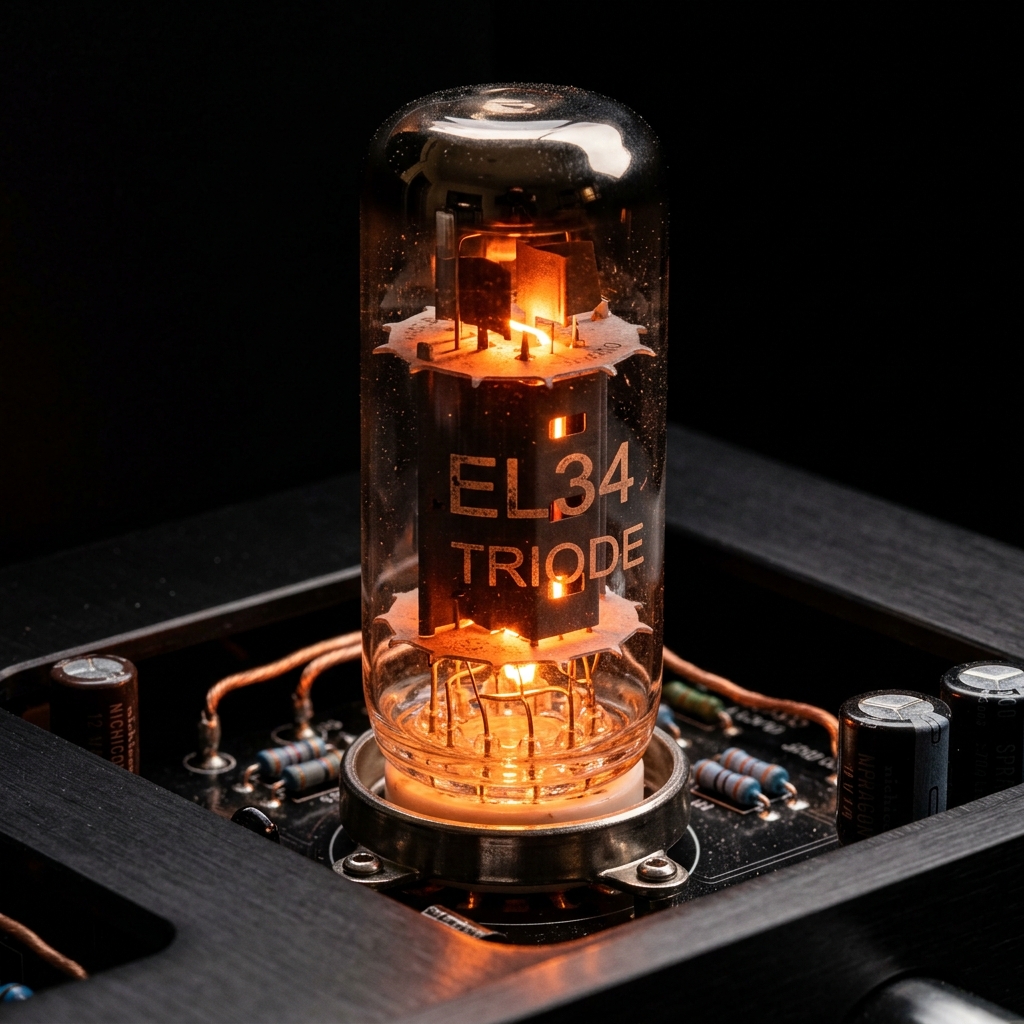
Vacuum Tube Amplifiers: High Impedance and Warm Coloration
Vacuum tube amplifiers offer a stark contrast to solid-state designs. Many tube amplifiers, particularly Output Transformerless (OTL) designs, have output impedances that range from 30 ohms to well over 120 ohms. OTL amplifiers eliminate the output coupling transformer to achieve a cleaner signal path and reduce harmonic distortion, but this comes at the cost of high output impedance.
When you connect a headphone to a high-impedance OTL tube amplifier, you violate the 1/8th rule. However, in the audiophile community, this violation is often intentional and highly sought after. Here is why:
- Impedance Curves: Dynamic headphones do not have a flat impedance curve. A dynamic driver has a physical resonant frequency, typically in the mid-bass region (around 80Hz to 120Hz), where its impedance spikes significantly. For example, the famous Sennheiser HD600 has a nominal impedance of 300 ohms, but at its resonant frequency in the bass, its impedance rises to over 500 ohms.
- The Bass Hump: When driven by a high-output-impedance amplifier, a voltage divider is created. Because the headphone’s impedance is higher in the bass region, a larger share of the amplifier’s voltage is dropped across the headphone at those specific frequencies. This results in a physical boost in the bass response—creating a warm, lush “bass hump.”
- Harmonic Richness: This interaction, combined with the pleasant second-order harmonic distortion inherent to vacuum tubes, creates the warm, holographic, and spacious sound signature that tube enthusiasts love.
However, if you pair low-impedance headphones (like 32-ohm models) with an OTL tube amp, the mismatch is too severe, resulting in bloated, uncontrolled bass and a severe loss of treble detail. For detailed breakdowns of these gear pairings, check out our headphone amplifier comparisons. To mitigate this, some tube amplifiers use output transformers (often called OTC, or Output Transformer Coupled amps) to match the high impedance of the tubes to low-impedance headphones. This lowers the output impedance to a manageable 1 to 10 ohms, making them more versatile.
Planar Magnetic Headphones and Output Impedance
A common question on our headphone audio blog is how planar magnetic headphones interact with tube and solid-state amplifiers. Unlike dynamic headphones, planar magnetic headphones use a flat diaphragm with conductive traces spread across it, suspended between magnets.
Electrically, planar magnetic drivers behave almost like pure resistors. This means their impedance curve is virtually flat across the entire audible frequency spectrum. Whether at 20Hz or 20kHz, a planar magnetic headphone’s impedance remains constant.
Because of this flat impedance curve, driving a planar magnetic headphone with a high-output-impedance tube amplifier will NOT cause any frequency response deviation or “bass hump.” The voltage divider ratio remains identical at all frequencies. However, planar magnetics are notoriously current-hungry. Because high-impedance OTL tube amplifiers are designed to output voltage rather than current, they will often struggle to drive planar magnetics to loud volumes, leading to clipping, distortion, and a compressed dynamic range. Thus, solid-state amplifiers or transformer-coupled tube amplifiers remain the ideal pairing for planar magnetic headphones.
Headphone and Amplifier Matching Guide
To help you navigate these pairings, the following table summarizes how different amplifier topologies interact with various headphone types based on output impedance:
| Amplifier Category | Typical Output Impedance (Ω) | Damping Factor (32Ω Headphone) | Damping Factor (300Ω Headphone) | Ideal Headphone Types |
|---|---|---|---|---|
| Modern Solid-State (e.g., Topping, JDS Labs) | < 0.1 Ω | > 320 (Excellent) | > 3,000 (Outstanding) | Low-impedance, planar magnetics, sensitive IEMs |
| Traditional Solid-State / Reciever Out | 10 Ω – 120 Ω | 0.26 – 3.2 (Poor) | 2.5 – 30 (Moderate) | High-impedance dynamic headphones |
| Transformer-Coupled Tube (OTC) | 1 Ω – 10 Ω | 3.2 – 32 (Moderate) | 30 – 300 (Good) | Moderate to high-impedance headphones |
| Output Transformerless Tube (OTL) | 30 Ω – 120 Ω | 0.26 – 1.0 (Very Poor) | 2.5 – 10 (Moderate) | High-impedance (300Ω – 600Ω) dynamic headphones only |
Visualizing Frequency Response Deviation
The chart below demonstrates how a high output impedance amplifier alters the frequency response of a typical dynamic headphone with an impedance peak in the bass, compared to a transparent low-impedance solid-state amplifier:
Conclusion: Which Philosophy Suits Your Ears?
When it comes to output impedance in headphone amplifiers, there is no single “correct” answer, only different design philosophies. Solid-state amplifiers strive for technical accuracy and neutrality, achieving near-zero output impedance to provide maximum damping and transparency. This is the optimal route if you want to hear your headphones exactly as they were engineered, or if you primarily listen to planar magnetic and low-impedance dynamic models.
Vacuum tube amplifiers—particularly OTL designs—embrace high output impedance as a mechanism for sound shaping. By interacting with the dynamic impedance variations of high-impedance headphones, they create a warm, engaging, and spacious acoustic character. Ultimately, the choice between solid-state and tube amplification comes down to whether you prioritize source-to-transducer accuracy or the musical, colored synergy of high-impedance matching.
Discuss more about this, FAQ, Announcements and Miscellaneous, over on our community.
