External DACs and Amps are not snake oil; they provide measurable and audible improvements to the audio chain. While they aren’t strictly necessary for every listener, they are the key to unlocking the true potential of high-end audio equipment. If you’re starting your audiophile journey, consider starting with a budget-friendly combo unit to hear the difference for yourself before diving into expensive standalone stacks.
Conclusion
External DACs and Amps are not snake oil; they provide measurable and audible improvements to the audio chain. While they aren’t strictly necessary for every listener, they are the key to unlocking the true potential of high-end audio equipment. If you’re starting your audiophile journey, consider starting with a budget-friendly combo unit to hear the difference for yourself before diving into expensive standalone stacks.
Conclusion
External DACs and Amps are not snake oil; they provide measurable and audible improvements to the audio chain. While they aren’t strictly necessary for every listener, they are the key to unlocking the true potential of high-end audio equipment. If you’re starting your audiophile journey, consider starting with a budget-friendly combo unit to hear the difference for yourself before diving into expensive standalone stacks.
However, if you own or plan to purchase audiophile-grade headphones—such as the Sennheiser HD600 series, Beyerdynamic DT models with 250 ohms or higher, or power-hungry planar magnetic headphones from Hifiman or Audeze—an external DAC/Amp setup is highly recommended, if not entirely necessary. These headphones require clean, robust power to sound properly balanced and dynamic.
Conclusion
External DACs and Amps are not snake oil; they provide measurable and audible improvements to the audio chain. While they aren’t strictly necessary for every listener, they are the key to unlocking the true potential of high-end audio equipment. If you’re starting your audiophile journey, consider starting with a budget-friendly combo unit to hear the difference for yourself before diving into expensive standalone stacks.
However, if you own or plan to purchase audiophile-grade headphones—such as the Sennheiser HD600 series, Beyerdynamic DT models with 250 ohms or higher, or power-hungry planar magnetic headphones from Hifiman or Audeze—an external DAC/Amp setup is highly recommended, if not entirely necessary. These headphones require clean, robust power to sound properly balanced and dynamic.
Conclusion
External DACs and Amps are not snake oil; they provide measurable and audible improvements to the audio chain. While they aren’t strictly necessary for every listener, they are the key to unlocking the true potential of high-end audio equipment. If you’re starting your audiophile journey, consider starting with a budget-friendly combo unit to hear the difference for yourself before diving into expensive standalone stacks.
If you are using standard consumer earbuds, wireless Bluetooth headphones (which have their own internal DACs and Amps), or easy-to-drive gaming headsets, an external DAC and Amp will likely not provide a noticeable improvement. Your money would be better spent upgrading the headphones themselves.
However, if you own or plan to purchase audiophile-grade headphones—such as the Sennheiser HD600 series, Beyerdynamic DT models with 250 ohms or higher, or power-hungry planar magnetic headphones from Hifiman or Audeze—an external DAC/Amp setup is highly recommended, if not entirely necessary. These headphones require clean, robust power to sound properly balanced and dynamic.
Conclusion
External DACs and Amps are not snake oil; they provide measurable and audible improvements to the audio chain. While they aren’t strictly necessary for every listener, they are the key to unlocking the true potential of high-end audio equipment. If you’re starting your audiophile journey, consider starting with a budget-friendly combo unit to hear the difference for yourself before diving into expensive standalone stacks.
If you are using standard consumer earbuds, wireless Bluetooth headphones (which have their own internal DACs and Amps), or easy-to-drive gaming headsets, an external DAC and Amp will likely not provide a noticeable improvement. Your money would be better spent upgrading the headphones themselves.
However, if you own or plan to purchase audiophile-grade headphones—such as the Sennheiser HD600 series, Beyerdynamic DT models with 250 ohms or higher, or power-hungry planar magnetic headphones from Hifiman or Audeze—an external DAC/Amp setup is highly recommended, if not entirely necessary. These headphones require clean, robust power to sound properly balanced and dynamic.
Conclusion
External DACs and Amps are not snake oil; they provide measurable and audible improvements to the audio chain. While they aren’t strictly necessary for every listener, they are the key to unlocking the true potential of high-end audio equipment. If you’re starting your audiophile journey, consider starting with a budget-friendly combo unit to hear the difference for yourself before diving into expensive standalone stacks.
The short answer is: It depends on your headphones.
If you are using standard consumer earbuds, wireless Bluetooth headphones (which have their own internal DACs and Amps), or easy-to-drive gaming headsets, an external DAC and Amp will likely not provide a noticeable improvement. Your money would be better spent upgrading the headphones themselves.
However, if you own or plan to purchase audiophile-grade headphones—such as the Sennheiser HD600 series, Beyerdynamic DT models with 250 ohms or higher, or power-hungry planar magnetic headphones from Hifiman or Audeze—an external DAC/Amp setup is highly recommended, if not entirely necessary. These headphones require clean, robust power to sound properly balanced and dynamic.
Conclusion
External DACs and Amps are not snake oil; they provide measurable and audible improvements to the audio chain. While they aren’t strictly necessary for every listener, they are the key to unlocking the true potential of high-end audio equipment. If you’re starting your audiophile journey, consider starting with a budget-friendly combo unit to hear the difference for yourself before diving into expensive standalone stacks.
The short answer is: It depends on your headphones.
If you are using standard consumer earbuds, wireless Bluetooth headphones (which have their own internal DACs and Amps), or easy-to-drive gaming headsets, an external DAC and Amp will likely not provide a noticeable improvement. Your money would be better spent upgrading the headphones themselves.
However, if you own or plan to purchase audiophile-grade headphones—such as the Sennheiser HD600 series, Beyerdynamic DT models with 250 ohms or higher, or power-hungry planar magnetic headphones from Hifiman or Audeze—an external DAC/Amp setup is highly recommended, if not entirely necessary. These headphones require clean, robust power to sound properly balanced and dynamic.
Conclusion
External DACs and Amps are not snake oil; they provide measurable and audible improvements to the audio chain. While they aren’t strictly necessary for every listener, they are the key to unlocking the true potential of high-end audio equipment. If you’re starting your audiophile journey, consider starting with a budget-friendly combo unit to hear the difference for yourself before diving into expensive standalone stacks.
Do You Really Need One?
The short answer is: It depends on your headphones.
If you are using standard consumer earbuds, wireless Bluetooth headphones (which have their own internal DACs and Amps), or easy-to-drive gaming headsets, an external DAC and Amp will likely not provide a noticeable improvement. Your money would be better spent upgrading the headphones themselves.
However, if you own or plan to purchase audiophile-grade headphones—such as the Sennheiser HD600 series, Beyerdynamic DT models with 250 ohms or higher, or power-hungry planar magnetic headphones from Hifiman or Audeze—an external DAC/Amp setup is highly recommended, if not entirely necessary. These headphones require clean, robust power to sound properly balanced and dynamic.
Conclusion
External DACs and Amps are not snake oil; they provide measurable and audible improvements to the audio chain. While they aren’t strictly necessary for every listener, they are the key to unlocking the true potential of high-end audio equipment. If you’re starting your audiophile journey, consider starting with a budget-friendly combo unit to hear the difference for yourself before diving into expensive standalone stacks.
Do You Really Need One?
The short answer is: It depends on your headphones.
If you are using standard consumer earbuds, wireless Bluetooth headphones (which have their own internal DACs and Amps), or easy-to-drive gaming headsets, an external DAC and Amp will likely not provide a noticeable improvement. Your money would be better spent upgrading the headphones themselves.
However, if you own or plan to purchase audiophile-grade headphones—such as the Sennheiser HD600 series, Beyerdynamic DT models with 250 ohms or higher, or power-hungry planar magnetic headphones from Hifiman or Audeze—an external DAC/Amp setup is highly recommended, if not entirely necessary. These headphones require clean, robust power to sound properly balanced and dynamic.
Conclusion
External DACs and Amps are not snake oil; they provide measurable and audible improvements to the audio chain. While they aren’t strictly necessary for every listener, they are the key to unlocking the true potential of high-end audio equipment. If you’re starting your audiophile journey, consider starting with a budget-friendly combo unit to hear the difference for yourself before diving into expensive standalone stacks.
| Feature | Built-in (Smartphone/PC) | Dedicated (External DAC/Amp) |
|---|---|---|
| Interference Isolation | Poor (shares board with CPU/GPU) | Excellent (isolated circuitry) |
| Power Output | Low (usually under 30mW) | High (often 1000mW+) |
| Headphone Compatibility | Low impedance (IEMs, consumer cans) | All, including high impedance planar magnetics |
| Volume Control | Digital steps (can degrade quality) | Analog potentiometer (precise, uncompressed) |
| Cost | Free (included with device) | $100 to $2000+ |
Do You Really Need One?
The short answer is: It depends on your headphones.
If you are using standard consumer earbuds, wireless Bluetooth headphones (which have their own internal DACs and Amps), or easy-to-drive gaming headsets, an external DAC and Amp will likely not provide a noticeable improvement. Your money would be better spent upgrading the headphones themselves.
However, if you own or plan to purchase audiophile-grade headphones—such as the Sennheiser HD600 series, Beyerdynamic DT models with 250 ohms or higher, or power-hungry planar magnetic headphones from Hifiman or Audeze—an external DAC/Amp setup is highly recommended, if not entirely necessary. These headphones require clean, robust power to sound properly balanced and dynamic.
Conclusion
External DACs and Amps are not snake oil; they provide measurable and audible improvements to the audio chain. While they aren’t strictly necessary for every listener, they are the key to unlocking the true potential of high-end audio equipment. If you’re starting your audiophile journey, consider starting with a budget-friendly combo unit to hear the difference for yourself before diving into expensive standalone stacks.
| Feature | Built-in (Smartphone/PC) | Dedicated (External DAC/Amp) |
|---|---|---|
| Interference Isolation | Poor (shares board with CPU/GPU) | Excellent (isolated circuitry) |
| Power Output | Low (usually under 30mW) | High (often 1000mW+) |
| Headphone Compatibility | Low impedance (IEMs, consumer cans) | All, including high impedance planar magnetics |
| Volume Control | Digital steps (can degrade quality) | Analog potentiometer (precise, uncompressed) |
| Cost | Free (included with device) | $100 to $2000+ |
Do You Really Need One?
The short answer is: It depends on your headphones.
If you are using standard consumer earbuds, wireless Bluetooth headphones (which have their own internal DACs and Amps), or easy-to-drive gaming headsets, an external DAC and Amp will likely not provide a noticeable improvement. Your money would be better spent upgrading the headphones themselves.
However, if you own or plan to purchase audiophile-grade headphones—such as the Sennheiser HD600 series, Beyerdynamic DT models with 250 ohms or higher, or power-hungry planar magnetic headphones from Hifiman or Audeze—an external DAC/Amp setup is highly recommended, if not entirely necessary. These headphones require clean, robust power to sound properly balanced and dynamic.
Conclusion
External DACs and Amps are not snake oil; they provide measurable and audible improvements to the audio chain. While they aren’t strictly necessary for every listener, they are the key to unlocking the true potential of high-end audio equipment. If you’re starting your audiophile journey, consider starting with a budget-friendly combo unit to hear the difference for yourself before diving into expensive standalone stacks.
To help you understand the differences, here is a quick comparison between typical built-in audio components and dedicated external gear:
| Feature | Built-in (Smartphone/PC) | Dedicated (External DAC/Amp) |
|---|---|---|
| Interference Isolation | Poor (shares board with CPU/GPU) | Excellent (isolated circuitry) |
| Power Output | Low (usually under 30mW) | High (often 1000mW+) |
| Headphone Compatibility | Low impedance (IEMs, consumer cans) | All, including high impedance planar magnetics |
| Volume Control | Digital steps (can degrade quality) | Analog potentiometer (precise, uncompressed) |
| Cost | Free (included with device) | $100 to $2000+ |
Do You Really Need One?
The short answer is: It depends on your headphones.
If you are using standard consumer earbuds, wireless Bluetooth headphones (which have their own internal DACs and Amps), or easy-to-drive gaming headsets, an external DAC and Amp will likely not provide a noticeable improvement. Your money would be better spent upgrading the headphones themselves.
However, if you own or plan to purchase audiophile-grade headphones—such as the Sennheiser HD600 series, Beyerdynamic DT models with 250 ohms or higher, or power-hungry planar magnetic headphones from Hifiman or Audeze—an external DAC/Amp setup is highly recommended, if not entirely necessary. These headphones require clean, robust power to sound properly balanced and dynamic.
Conclusion
External DACs and Amps are not snake oil; they provide measurable and audible improvements to the audio chain. While they aren’t strictly necessary for every listener, they are the key to unlocking the true potential of high-end audio equipment. If you’re starting your audiophile journey, consider starting with a budget-friendly combo unit to hear the difference for yourself before diving into expensive standalone stacks.
To help you understand the differences, here is a quick comparison between typical built-in audio components and dedicated external gear:
| Feature | Built-in (Smartphone/PC) | Dedicated (External DAC/Amp) |
|---|---|---|
| Interference Isolation | Poor (shares board with CPU/GPU) | Excellent (isolated circuitry) |
| Power Output | Low (usually under 30mW) | High (often 1000mW+) |
| Headphone Compatibility | Low impedance (IEMs, consumer cans) | All, including high impedance planar magnetics |
| Volume Control | Digital steps (can degrade quality) | Analog potentiometer (precise, uncompressed) |
| Cost | Free (included with device) | $100 to $2000+ |
Do You Really Need One?
The short answer is: It depends on your headphones.
If you are using standard consumer earbuds, wireless Bluetooth headphones (which have their own internal DACs and Amps), or easy-to-drive gaming headsets, an external DAC and Amp will likely not provide a noticeable improvement. Your money would be better spent upgrading the headphones themselves.
However, if you own or plan to purchase audiophile-grade headphones—such as the Sennheiser HD600 series, Beyerdynamic DT models with 250 ohms or higher, or power-hungry planar magnetic headphones from Hifiman or Audeze—an external DAC/Amp setup is highly recommended, if not entirely necessary. These headphones require clean, robust power to sound properly balanced and dynamic.
Conclusion
External DACs and Amps are not snake oil; they provide measurable and audible improvements to the audio chain. While they aren’t strictly necessary for every listener, they are the key to unlocking the true potential of high-end audio equipment. If you’re starting your audiophile journey, consider starting with a budget-friendly combo unit to hear the difference for yourself before diving into expensive standalone stacks.
Built-in vs. Dedicated Equipment
To help you understand the differences, here is a quick comparison between typical built-in audio components and dedicated external gear:
| Feature | Built-in (Smartphone/PC) | Dedicated (External DAC/Amp) |
|---|---|---|
| Interference Isolation | Poor (shares board with CPU/GPU) | Excellent (isolated circuitry) |
| Power Output | Low (usually under 30mW) | High (often 1000mW+) |
| Headphone Compatibility | Low impedance (IEMs, consumer cans) | All, including high impedance planar magnetics |
| Volume Control | Digital steps (can degrade quality) | Analog potentiometer (precise, uncompressed) |
| Cost | Free (included with device) | $100 to $2000+ |
Do You Really Need One?
The short answer is: It depends on your headphones.
If you are using standard consumer earbuds, wireless Bluetooth headphones (which have their own internal DACs and Amps), or easy-to-drive gaming headsets, an external DAC and Amp will likely not provide a noticeable improvement. Your money would be better spent upgrading the headphones themselves.
However, if you own or plan to purchase audiophile-grade headphones—such as the Sennheiser HD600 series, Beyerdynamic DT models with 250 ohms or higher, or power-hungry planar magnetic headphones from Hifiman or Audeze—an external DAC/Amp setup is highly recommended, if not entirely necessary. These headphones require clean, robust power to sound properly balanced and dynamic.
Conclusion
External DACs and Amps are not snake oil; they provide measurable and audible improvements to the audio chain. While they aren’t strictly necessary for every listener, they are the key to unlocking the true potential of high-end audio equipment. If you’re starting your audiophile journey, consider starting with a budget-friendly combo unit to hear the difference for yourself before diving into expensive standalone stacks.
Built-in vs. Dedicated Equipment
To help you understand the differences, here is a quick comparison between typical built-in audio components and dedicated external gear:
| Feature | Built-in (Smartphone/PC) | Dedicated (External DAC/Amp) |
|---|---|---|
| Interference Isolation | Poor (shares board with CPU/GPU) | Excellent (isolated circuitry) |
| Power Output | Low (usually under 30mW) | High (often 1000mW+) |
| Headphone Compatibility | Low impedance (IEMs, consumer cans) | All, including high impedance planar magnetics |
| Volume Control | Digital steps (can degrade quality) | Analog potentiometer (precise, uncompressed) |
| Cost | Free (included with device) | $100 to $2000+ |
Do You Really Need One?
The short answer is: It depends on your headphones.
If you are using standard consumer earbuds, wireless Bluetooth headphones (which have their own internal DACs and Amps), or easy-to-drive gaming headsets, an external DAC and Amp will likely not provide a noticeable improvement. Your money would be better spent upgrading the headphones themselves.
However, if you own or plan to purchase audiophile-grade headphones—such as the Sennheiser HD600 series, Beyerdynamic DT models with 250 ohms or higher, or power-hungry planar magnetic headphones from Hifiman or Audeze—an external DAC/Amp setup is highly recommended, if not entirely necessary. These headphones require clean, robust power to sound properly balanced and dynamic.
Conclusion
External DACs and Amps are not snake oil; they provide measurable and audible improvements to the audio chain. While they aren’t strictly necessary for every listener, they are the key to unlocking the true potential of high-end audio equipment. If you’re starting your audiophile journey, consider starting with a budget-friendly combo unit to hear the difference for yourself before diving into expensive standalone stacks.
- Reduced Noise and Interference: External units are isolated from the electrical noise generated by your computer’s motherboard or smartphone’s processor, resulting in a blacker background and clearer audio.
- Higher Output Power: Dedicated amplifiers provide significantly more power, ensuring your headphones are driven to their full potential with tight bass and dynamic range.
- Better Format Support: High-end DACs can decode high-resolution audio formats (like DSD or high-bitrate PCM) that built-in DACs might not support.
- Physical Controls: Dedicated amps offer precise volume knobs and sometimes gain switches, giving you better tactile control over your listening experience.
Built-in vs. Dedicated Equipment
To help you understand the differences, here is a quick comparison between typical built-in audio components and dedicated external gear:
| Feature | Built-in (Smartphone/PC) | Dedicated (External DAC/Amp) |
|---|---|---|
| Interference Isolation | Poor (shares board with CPU/GPU) | Excellent (isolated circuitry) |
| Power Output | Low (usually under 30mW) | High (often 1000mW+) |
| Headphone Compatibility | Low impedance (IEMs, consumer cans) | All, including high impedance planar magnetics |
| Volume Control | Digital steps (can degrade quality) | Analog potentiometer (precise, uncompressed) |
| Cost | Free (included with device) | $100 to $2000+ |
Do You Really Need One?
The short answer is: It depends on your headphones.
If you are using standard consumer earbuds, wireless Bluetooth headphones (which have their own internal DACs and Amps), or easy-to-drive gaming headsets, an external DAC and Amp will likely not provide a noticeable improvement. Your money would be better spent upgrading the headphones themselves.
However, if you own or plan to purchase audiophile-grade headphones—such as the Sennheiser HD600 series, Beyerdynamic DT models with 250 ohms or higher, or power-hungry planar magnetic headphones from Hifiman or Audeze—an external DAC/Amp setup is highly recommended, if not entirely necessary. These headphones require clean, robust power to sound properly balanced and dynamic.
Conclusion
External DACs and Amps are not snake oil; they provide measurable and audible improvements to the audio chain. While they aren’t strictly necessary for every listener, they are the key to unlocking the true potential of high-end audio equipment. If you’re starting your audiophile journey, consider starting with a budget-friendly combo unit to hear the difference for yourself before diving into expensive standalone stacks.
- Reduced Noise and Interference: External units are isolated from the electrical noise generated by your computer’s motherboard or smartphone’s processor, resulting in a blacker background and clearer audio.
- Higher Output Power: Dedicated amplifiers provide significantly more power, ensuring your headphones are driven to their full potential with tight bass and dynamic range.
- Better Format Support: High-end DACs can decode high-resolution audio formats (like DSD or high-bitrate PCM) that built-in DACs might not support.
- Physical Controls: Dedicated amps offer precise volume knobs and sometimes gain switches, giving you better tactile control over your listening experience.
Built-in vs. Dedicated Equipment
To help you understand the differences, here is a quick comparison between typical built-in audio components and dedicated external gear:
| Feature | Built-in (Smartphone/PC) | Dedicated (External DAC/Amp) |
|---|---|---|
| Interference Isolation | Poor (shares board with CPU/GPU) | Excellent (isolated circuitry) |
| Power Output | Low (usually under 30mW) | High (often 1000mW+) |
| Headphone Compatibility | Low impedance (IEMs, consumer cans) | All, including high impedance planar magnetics |
| Volume Control | Digital steps (can degrade quality) | Analog potentiometer (precise, uncompressed) |
| Cost | Free (included with device) | $100 to $2000+ |
Do You Really Need One?
The short answer is: It depends on your headphones.
If you are using standard consumer earbuds, wireless Bluetooth headphones (which have their own internal DACs and Amps), or easy-to-drive gaming headsets, an external DAC and Amp will likely not provide a noticeable improvement. Your money would be better spent upgrading the headphones themselves.
However, if you own or plan to purchase audiophile-grade headphones—such as the Sennheiser HD600 series, Beyerdynamic DT models with 250 ohms or higher, or power-hungry planar magnetic headphones from Hifiman or Audeze—an external DAC/Amp setup is highly recommended, if not entirely necessary. These headphones require clean, robust power to sound properly balanced and dynamic.
Conclusion
External DACs and Amps are not snake oil; they provide measurable and audible improvements to the audio chain. While they aren’t strictly necessary for every listener, they are the key to unlocking the true potential of high-end audio equipment. If you’re starting your audiophile journey, consider starting with a budget-friendly combo unit to hear the difference for yourself before diving into expensive standalone stacks.
Investing in a dedicated, external DAC and Amp (either as separate units in a “stack” or as a combined unit) can offer several significant benefits:
- Reduced Noise and Interference: External units are isolated from the electrical noise generated by your computer’s motherboard or smartphone’s processor, resulting in a blacker background and clearer audio.
- Higher Output Power: Dedicated amplifiers provide significantly more power, ensuring your headphones are driven to their full potential with tight bass and dynamic range.
- Better Format Support: High-end DACs can decode high-resolution audio formats (like DSD or high-bitrate PCM) that built-in DACs might not support.
- Physical Controls: Dedicated amps offer precise volume knobs and sometimes gain switches, giving you better tactile control over your listening experience.
Built-in vs. Dedicated Equipment
To help you understand the differences, here is a quick comparison between typical built-in audio components and dedicated external gear:
| Feature | Built-in (Smartphone/PC) | Dedicated (External DAC/Amp) |
|---|---|---|
| Interference Isolation | Poor (shares board with CPU/GPU) | Excellent (isolated circuitry) |
| Power Output | Low (usually under 30mW) | High (often 1000mW+) |
| Headphone Compatibility | Low impedance (IEMs, consumer cans) | All, including high impedance planar magnetics |
| Volume Control | Digital steps (can degrade quality) | Analog potentiometer (precise, uncompressed) |
| Cost | Free (included with device) | $100 to $2000+ |
Do You Really Need One?
The short answer is: It depends on your headphones.
If you are using standard consumer earbuds, wireless Bluetooth headphones (which have their own internal DACs and Amps), or easy-to-drive gaming headsets, an external DAC and Amp will likely not provide a noticeable improvement. Your money would be better spent upgrading the headphones themselves.
However, if you own or plan to purchase audiophile-grade headphones—such as the Sennheiser HD600 series, Beyerdynamic DT models with 250 ohms or higher, or power-hungry planar magnetic headphones from Hifiman or Audeze—an external DAC/Amp setup is highly recommended, if not entirely necessary. These headphones require clean, robust power to sound properly balanced and dynamic.
Conclusion
External DACs and Amps are not snake oil; they provide measurable and audible improvements to the audio chain. While they aren’t strictly necessary for every listener, they are the key to unlocking the true potential of high-end audio equipment. If you’re starting your audiophile journey, consider starting with a budget-friendly combo unit to hear the difference for yourself before diving into expensive standalone stacks.
Investing in a dedicated, external DAC and Amp (either as separate units in a “stack” or as a combined unit) can offer several significant benefits:
- Reduced Noise and Interference: External units are isolated from the electrical noise generated by your computer’s motherboard or smartphone’s processor, resulting in a blacker background and clearer audio.
- Higher Output Power: Dedicated amplifiers provide significantly more power, ensuring your headphones are driven to their full potential with tight bass and dynamic range.
- Better Format Support: High-end DACs can decode high-resolution audio formats (like DSD or high-bitrate PCM) that built-in DACs might not support.
- Physical Controls: Dedicated amps offer precise volume knobs and sometimes gain switches, giving you better tactile control over your listening experience.
Built-in vs. Dedicated Equipment
To help you understand the differences, here is a quick comparison between typical built-in audio components and dedicated external gear:
| Feature | Built-in (Smartphone/PC) | Dedicated (External DAC/Amp) |
|---|---|---|
| Interference Isolation | Poor (shares board with CPU/GPU) | Excellent (isolated circuitry) |
| Power Output | Low (usually under 30mW) | High (often 1000mW+) |
| Headphone Compatibility | Low impedance (IEMs, consumer cans) | All, including high impedance planar magnetics |
| Volume Control | Digital steps (can degrade quality) | Analog potentiometer (precise, uncompressed) |
| Cost | Free (included with device) | $100 to $2000+ |
Do You Really Need One?
The short answer is: It depends on your headphones.
If you are using standard consumer earbuds, wireless Bluetooth headphones (which have their own internal DACs and Amps), or easy-to-drive gaming headsets, an external DAC and Amp will likely not provide a noticeable improvement. Your money would be better spent upgrading the headphones themselves.
However, if you own or plan to purchase audiophile-grade headphones—such as the Sennheiser HD600 series, Beyerdynamic DT models with 250 ohms or higher, or power-hungry planar magnetic headphones from Hifiman or Audeze—an external DAC/Amp setup is highly recommended, if not entirely necessary. These headphones require clean, robust power to sound properly balanced and dynamic.
Conclusion
External DACs and Amps are not snake oil; they provide measurable and audible improvements to the audio chain. While they aren’t strictly necessary for every listener, they are the key to unlocking the true potential of high-end audio equipment. If you’re starting your audiophile journey, consider starting with a budget-friendly combo unit to hear the difference for yourself before diving into expensive standalone stacks.
The Benefits of Dedicated External DACs and Amps
Investing in a dedicated, external DAC and Amp (either as separate units in a “stack” or as a combined unit) can offer several significant benefits:
- Reduced Noise and Interference: External units are isolated from the electrical noise generated by your computer’s motherboard or smartphone’s processor, resulting in a blacker background and clearer audio.
- Higher Output Power: Dedicated amplifiers provide significantly more power, ensuring your headphones are driven to their full potential with tight bass and dynamic range.
- Better Format Support: High-end DACs can decode high-resolution audio formats (like DSD or high-bitrate PCM) that built-in DACs might not support.
- Physical Controls: Dedicated amps offer precise volume knobs and sometimes gain switches, giving you better tactile control over your listening experience.
Built-in vs. Dedicated Equipment
To help you understand the differences, here is a quick comparison between typical built-in audio components and dedicated external gear:
| Feature | Built-in (Smartphone/PC) | Dedicated (External DAC/Amp) |
|---|---|---|
| Interference Isolation | Poor (shares board with CPU/GPU) | Excellent (isolated circuitry) |
| Power Output | Low (usually under 30mW) | High (often 1000mW+) |
| Headphone Compatibility | Low impedance (IEMs, consumer cans) | All, including high impedance planar magnetics |
| Volume Control | Digital steps (can degrade quality) | Analog potentiometer (precise, uncompressed) |
| Cost | Free (included with device) | $100 to $2000+ |
Do You Really Need One?
The short answer is: It depends on your headphones.
If you are using standard consumer earbuds, wireless Bluetooth headphones (which have their own internal DACs and Amps), or easy-to-drive gaming headsets, an external DAC and Amp will likely not provide a noticeable improvement. Your money would be better spent upgrading the headphones themselves.
However, if you own or plan to purchase audiophile-grade headphones—such as the Sennheiser HD600 series, Beyerdynamic DT models with 250 ohms or higher, or power-hungry planar magnetic headphones from Hifiman or Audeze—an external DAC/Amp setup is highly recommended, if not entirely necessary. These headphones require clean, robust power to sound properly balanced and dynamic.
Conclusion
External DACs and Amps are not snake oil; they provide measurable and audible improvements to the audio chain. While they aren’t strictly necessary for every listener, they are the key to unlocking the true potential of high-end audio equipment. If you’re starting your audiophile journey, consider starting with a budget-friendly combo unit to hear the difference for yourself before diving into expensive standalone stacks.
The Benefits of Dedicated External DACs and Amps
Investing in a dedicated, external DAC and Amp (either as separate units in a “stack” or as a combined unit) can offer several significant benefits:
- Reduced Noise and Interference: External units are isolated from the electrical noise generated by your computer’s motherboard or smartphone’s processor, resulting in a blacker background and clearer audio.
- Higher Output Power: Dedicated amplifiers provide significantly more power, ensuring your headphones are driven to their full potential with tight bass and dynamic range.
- Better Format Support: High-end DACs can decode high-resolution audio formats (like DSD or high-bitrate PCM) that built-in DACs might not support.
- Physical Controls: Dedicated amps offer precise volume knobs and sometimes gain switches, giving you better tactile control over your listening experience.
Built-in vs. Dedicated Equipment
To help you understand the differences, here is a quick comparison between typical built-in audio components and dedicated external gear:
| Feature | Built-in (Smartphone/PC) | Dedicated (External DAC/Amp) |
|---|---|---|
| Interference Isolation | Poor (shares board with CPU/GPU) | Excellent (isolated circuitry) |
| Power Output | Low (usually under 30mW) | High (often 1000mW+) |
| Headphone Compatibility | Low impedance (IEMs, consumer cans) | All, including high impedance planar magnetics |
| Volume Control | Digital steps (can degrade quality) | Analog potentiometer (precise, uncompressed) |
| Cost | Free (included with device) | $100 to $2000+ |
Do You Really Need One?
The short answer is: It depends on your headphones.
If you are using standard consumer earbuds, wireless Bluetooth headphones (which have their own internal DACs and Amps), or easy-to-drive gaming headsets, an external DAC and Amp will likely not provide a noticeable improvement. Your money would be better spent upgrading the headphones themselves.
However, if you own or plan to purchase audiophile-grade headphones—such as the Sennheiser HD600 series, Beyerdynamic DT models with 250 ohms or higher, or power-hungry planar magnetic headphones from Hifiman or Audeze—an external DAC/Amp setup is highly recommended, if not entirely necessary. These headphones require clean, robust power to sound properly balanced and dynamic.
Conclusion
External DACs and Amps are not snake oil; they provide measurable and audible improvements to the audio chain. While they aren’t strictly necessary for every listener, they are the key to unlocking the true potential of high-end audio equipment. If you’re starting your audiophile journey, consider starting with a budget-friendly combo unit to hear the difference for yourself before diving into expensive standalone stacks.
Like DACs, amplifiers are built into almost every device that has a headphone jack or built-in speakers. But built-in amps often lack the power to properly drive high-impedance or low-sensitivity audiophile headphones. When an underpowered amp tries to push these demanding headphones, you might experience low volume, distorted bass, or a cramped soundstage.
The Benefits of Dedicated External DACs and Amps
Investing in a dedicated, external DAC and Amp (either as separate units in a “stack” or as a combined unit) can offer several significant benefits:
- Reduced Noise and Interference: External units are isolated from the electrical noise generated by your computer’s motherboard or smartphone’s processor, resulting in a blacker background and clearer audio.
- Higher Output Power: Dedicated amplifiers provide significantly more power, ensuring your headphones are driven to their full potential with tight bass and dynamic range.
- Better Format Support: High-end DACs can decode high-resolution audio formats (like DSD or high-bitrate PCM) that built-in DACs might not support.
- Physical Controls: Dedicated amps offer precise volume knobs and sometimes gain switches, giving you better tactile control over your listening experience.
Built-in vs. Dedicated Equipment
To help you understand the differences, here is a quick comparison between typical built-in audio components and dedicated external gear:
| Feature | Built-in (Smartphone/PC) | Dedicated (External DAC/Amp) |
|---|---|---|
| Interference Isolation | Poor (shares board with CPU/GPU) | Excellent (isolated circuitry) |
| Power Output | Low (usually under 30mW) | High (often 1000mW+) |
| Headphone Compatibility | Low impedance (IEMs, consumer cans) | All, including high impedance planar magnetics |
| Volume Control | Digital steps (can degrade quality) | Analog potentiometer (precise, uncompressed) |
| Cost | Free (included with device) | $100 to $2000+ |
Do You Really Need One?
The short answer is: It depends on your headphones.
If you are using standard consumer earbuds, wireless Bluetooth headphones (which have their own internal DACs and Amps), or easy-to-drive gaming headsets, an external DAC and Amp will likely not provide a noticeable improvement. Your money would be better spent upgrading the headphones themselves.
However, if you own or plan to purchase audiophile-grade headphones—such as the Sennheiser HD600 series, Beyerdynamic DT models with 250 ohms or higher, or power-hungry planar magnetic headphones from Hifiman or Audeze—an external DAC/Amp setup is highly recommended, if not entirely necessary. These headphones require clean, robust power to sound properly balanced and dynamic.
Conclusion
External DACs and Amps are not snake oil; they provide measurable and audible improvements to the audio chain. While they aren’t strictly necessary for every listener, they are the key to unlocking the true potential of high-end audio equipment. If you’re starting your audiophile journey, consider starting with a budget-friendly combo unit to hear the difference for yourself before diving into expensive standalone stacks.
Like DACs, amplifiers are built into almost every device that has a headphone jack or built-in speakers. But built-in amps often lack the power to properly drive high-impedance or low-sensitivity audiophile headphones. When an underpowered amp tries to push these demanding headphones, you might experience low volume, distorted bass, or a cramped soundstage.
The Benefits of Dedicated External DACs and Amps
Investing in a dedicated, external DAC and Amp (either as separate units in a “stack” or as a combined unit) can offer several significant benefits:
- Reduced Noise and Interference: External units are isolated from the electrical noise generated by your computer’s motherboard or smartphone’s processor, resulting in a blacker background and clearer audio.
- Higher Output Power: Dedicated amplifiers provide significantly more power, ensuring your headphones are driven to their full potential with tight bass and dynamic range.
- Better Format Support: High-end DACs can decode high-resolution audio formats (like DSD or high-bitrate PCM) that built-in DACs might not support.
- Physical Controls: Dedicated amps offer precise volume knobs and sometimes gain switches, giving you better tactile control over your listening experience.
Built-in vs. Dedicated Equipment
To help you understand the differences, here is a quick comparison between typical built-in audio components and dedicated external gear:
| Feature | Built-in (Smartphone/PC) | Dedicated (External DAC/Amp) |
|---|---|---|
| Interference Isolation | Poor (shares board with CPU/GPU) | Excellent (isolated circuitry) |
| Power Output | Low (usually under 30mW) | High (often 1000mW+) |
| Headphone Compatibility | Low impedance (IEMs, consumer cans) | All, including high impedance planar magnetics |
| Volume Control | Digital steps (can degrade quality) | Analog potentiometer (precise, uncompressed) |
| Cost | Free (included with device) | $100 to $2000+ |
Do You Really Need One?
The short answer is: It depends on your headphones.
If you are using standard consumer earbuds, wireless Bluetooth headphones (which have their own internal DACs and Amps), or easy-to-drive gaming headsets, an external DAC and Amp will likely not provide a noticeable improvement. Your money would be better spent upgrading the headphones themselves.
However, if you own or plan to purchase audiophile-grade headphones—such as the Sennheiser HD600 series, Beyerdynamic DT models with 250 ohms or higher, or power-hungry planar magnetic headphones from Hifiman or Audeze—an external DAC/Amp setup is highly recommended, if not entirely necessary. These headphones require clean, robust power to sound properly balanced and dynamic.
Conclusion
External DACs and Amps are not snake oil; they provide measurable and audible improvements to the audio chain. While they aren’t strictly necessary for every listener, they are the key to unlocking the true potential of high-end audio equipment. If you’re starting your audiophile journey, consider starting with a budget-friendly combo unit to hear the difference for yourself before diving into expensive standalone stacks.
An Amp, or Amplifier, takes the weak analog signal produced by the DAC and boosts its power (voltage and current) so that it can drive the mechanical components of your headphones or speakers. Without an amplifier, the signal from a DAC would be too weak to produce audible sound.
Like DACs, amplifiers are built into almost every device that has a headphone jack or built-in speakers. But built-in amps often lack the power to properly drive high-impedance or low-sensitivity audiophile headphones. When an underpowered amp tries to push these demanding headphones, you might experience low volume, distorted bass, or a cramped soundstage.
The Benefits of Dedicated External DACs and Amps
Investing in a dedicated, external DAC and Amp (either as separate units in a “stack” or as a combined unit) can offer several significant benefits:
- Reduced Noise and Interference: External units are isolated from the electrical noise generated by your computer’s motherboard or smartphone’s processor, resulting in a blacker background and clearer audio.
- Higher Output Power: Dedicated amplifiers provide significantly more power, ensuring your headphones are driven to their full potential with tight bass and dynamic range.
- Better Format Support: High-end DACs can decode high-resolution audio formats (like DSD or high-bitrate PCM) that built-in DACs might not support.
- Physical Controls: Dedicated amps offer precise volume knobs and sometimes gain switches, giving you better tactile control over your listening experience.
Built-in vs. Dedicated Equipment
To help you understand the differences, here is a quick comparison between typical built-in audio components and dedicated external gear:
| Feature | Built-in (Smartphone/PC) | Dedicated (External DAC/Amp) |
|---|---|---|
| Interference Isolation | Poor (shares board with CPU/GPU) | Excellent (isolated circuitry) |
| Power Output | Low (usually under 30mW) | High (often 1000mW+) |
| Headphone Compatibility | Low impedance (IEMs, consumer cans) | All, including high impedance planar magnetics |
| Volume Control | Digital steps (can degrade quality) | Analog potentiometer (precise, uncompressed) |
| Cost | Free (included with device) | $100 to $2000+ |
Do You Really Need One?
The short answer is: It depends on your headphones.
If you are using standard consumer earbuds, wireless Bluetooth headphones (which have their own internal DACs and Amps), or easy-to-drive gaming headsets, an external DAC and Amp will likely not provide a noticeable improvement. Your money would be better spent upgrading the headphones themselves.
However, if you own or plan to purchase audiophile-grade headphones—such as the Sennheiser HD600 series, Beyerdynamic DT models with 250 ohms or higher, or power-hungry planar magnetic headphones from Hifiman or Audeze—an external DAC/Amp setup is highly recommended, if not entirely necessary. These headphones require clean, robust power to sound properly balanced and dynamic.
Conclusion
External DACs and Amps are not snake oil; they provide measurable and audible improvements to the audio chain. While they aren’t strictly necessary for every listener, they are the key to unlocking the true potential of high-end audio equipment. If you’re starting your audiophile journey, consider starting with a budget-friendly combo unit to hear the difference for yourself before diving into expensive standalone stacks.
An Amp, or Amplifier, takes the weak analog signal produced by the DAC and boosts its power (voltage and current) so that it can drive the mechanical components of your headphones or speakers. Without an amplifier, the signal from a DAC would be too weak to produce audible sound.
Like DACs, amplifiers are built into almost every device that has a headphone jack or built-in speakers. But built-in amps often lack the power to properly drive high-impedance or low-sensitivity audiophile headphones. When an underpowered amp tries to push these demanding headphones, you might experience low volume, distorted bass, or a cramped soundstage.
The Benefits of Dedicated External DACs and Amps
Investing in a dedicated, external DAC and Amp (either as separate units in a “stack” or as a combined unit) can offer several significant benefits:
- Reduced Noise and Interference: External units are isolated from the electrical noise generated by your computer’s motherboard or smartphone’s processor, resulting in a blacker background and clearer audio.
- Higher Output Power: Dedicated amplifiers provide significantly more power, ensuring your headphones are driven to their full potential with tight bass and dynamic range.
- Better Format Support: High-end DACs can decode high-resolution audio formats (like DSD or high-bitrate PCM) that built-in DACs might not support.
- Physical Controls: Dedicated amps offer precise volume knobs and sometimes gain switches, giving you better tactile control over your listening experience.
Built-in vs. Dedicated Equipment
To help you understand the differences, here is a quick comparison between typical built-in audio components and dedicated external gear:
| Feature | Built-in (Smartphone/PC) | Dedicated (External DAC/Amp) |
|---|---|---|
| Interference Isolation | Poor (shares board with CPU/GPU) | Excellent (isolated circuitry) |
| Power Output | Low (usually under 30mW) | High (often 1000mW+) |
| Headphone Compatibility | Low impedance (IEMs, consumer cans) | All, including high impedance planar magnetics |
| Volume Control | Digital steps (can degrade quality) | Analog potentiometer (precise, uncompressed) |
| Cost | Free (included with device) | $100 to $2000+ |
Do You Really Need One?
The short answer is: It depends on your headphones.
If you are using standard consumer earbuds, wireless Bluetooth headphones (which have their own internal DACs and Amps), or easy-to-drive gaming headsets, an external DAC and Amp will likely not provide a noticeable improvement. Your money would be better spent upgrading the headphones themselves.
However, if you own or plan to purchase audiophile-grade headphones—such as the Sennheiser HD600 series, Beyerdynamic DT models with 250 ohms or higher, or power-hungry planar magnetic headphones from Hifiman or Audeze—an external DAC/Amp setup is highly recommended, if not entirely necessary. These headphones require clean, robust power to sound properly balanced and dynamic.
Conclusion
External DACs and Amps are not snake oil; they provide measurable and audible improvements to the audio chain. While they aren’t strictly necessary for every listener, they are the key to unlocking the true potential of high-end audio equipment. If you’re starting your audiophile journey, consider starting with a budget-friendly combo unit to hear the difference for yourself before diving into expensive standalone stacks.
What is an Amp?
An Amp, or Amplifier, takes the weak analog signal produced by the DAC and boosts its power (voltage and current) so that it can drive the mechanical components of your headphones or speakers. Without an amplifier, the signal from a DAC would be too weak to produce audible sound.
Like DACs, amplifiers are built into almost every device that has a headphone jack or built-in speakers. But built-in amps often lack the power to properly drive high-impedance or low-sensitivity audiophile headphones. When an underpowered amp tries to push these demanding headphones, you might experience low volume, distorted bass, or a cramped soundstage.
The Benefits of Dedicated External DACs and Amps
Investing in a dedicated, external DAC and Amp (either as separate units in a “stack” or as a combined unit) can offer several significant benefits:
- Reduced Noise and Interference: External units are isolated from the electrical noise generated by your computer’s motherboard or smartphone’s processor, resulting in a blacker background and clearer audio.
- Higher Output Power: Dedicated amplifiers provide significantly more power, ensuring your headphones are driven to their full potential with tight bass and dynamic range.
- Better Format Support: High-end DACs can decode high-resolution audio formats (like DSD or high-bitrate PCM) that built-in DACs might not support.
- Physical Controls: Dedicated amps offer precise volume knobs and sometimes gain switches, giving you better tactile control over your listening experience.
Built-in vs. Dedicated Equipment
To help you understand the differences, here is a quick comparison between typical built-in audio components and dedicated external gear:
| Feature | Built-in (Smartphone/PC) | Dedicated (External DAC/Amp) |
|---|---|---|
| Interference Isolation | Poor (shares board with CPU/GPU) | Excellent (isolated circuitry) |
| Power Output | Low (usually under 30mW) | High (often 1000mW+) |
| Headphone Compatibility | Low impedance (IEMs, consumer cans) | All, including high impedance planar magnetics |
| Volume Control | Digital steps (can degrade quality) | Analog potentiometer (precise, uncompressed) |
| Cost | Free (included with device) | $100 to $2000+ |
Do You Really Need One?
The short answer is: It depends on your headphones.
If you are using standard consumer earbuds, wireless Bluetooth headphones (which have their own internal DACs and Amps), or easy-to-drive gaming headsets, an external DAC and Amp will likely not provide a noticeable improvement. Your money would be better spent upgrading the headphones themselves.
However, if you own or plan to purchase audiophile-grade headphones—such as the Sennheiser HD600 series, Beyerdynamic DT models with 250 ohms or higher, or power-hungry planar magnetic headphones from Hifiman or Audeze—an external DAC/Amp setup is highly recommended, if not entirely necessary. These headphones require clean, robust power to sound properly balanced and dynamic.
Conclusion
External DACs and Amps are not snake oil; they provide measurable and audible improvements to the audio chain. While they aren’t strictly necessary for every listener, they are the key to unlocking the true potential of high-end audio equipment. If you’re starting your audiophile journey, consider starting with a budget-friendly combo unit to hear the difference for yourself before diving into expensive standalone stacks.
What is an Amp?
An Amp, or Amplifier, takes the weak analog signal produced by the DAC and boosts its power (voltage and current) so that it can drive the mechanical components of your headphones or speakers. Without an amplifier, the signal from a DAC would be too weak to produce audible sound.
Like DACs, amplifiers are built into almost every device that has a headphone jack or built-in speakers. But built-in amps often lack the power to properly drive high-impedance or low-sensitivity audiophile headphones. When an underpowered amp tries to push these demanding headphones, you might experience low volume, distorted bass, or a cramped soundstage.
The Benefits of Dedicated External DACs and Amps
Investing in a dedicated, external DAC and Amp (either as separate units in a “stack” or as a combined unit) can offer several significant benefits:
- Reduced Noise and Interference: External units are isolated from the electrical noise generated by your computer’s motherboard or smartphone’s processor, resulting in a blacker background and clearer audio.
- Higher Output Power: Dedicated amplifiers provide significantly more power, ensuring your headphones are driven to their full potential with tight bass and dynamic range.
- Better Format Support: High-end DACs can decode high-resolution audio formats (like DSD or high-bitrate PCM) that built-in DACs might not support.
- Physical Controls: Dedicated amps offer precise volume knobs and sometimes gain switches, giving you better tactile control over your listening experience.
Built-in vs. Dedicated Equipment
To help you understand the differences, here is a quick comparison between typical built-in audio components and dedicated external gear:
| Feature | Built-in (Smartphone/PC) | Dedicated (External DAC/Amp) |
|---|---|---|
| Interference Isolation | Poor (shares board with CPU/GPU) | Excellent (isolated circuitry) |
| Power Output | Low (usually under 30mW) | High (often 1000mW+) |
| Headphone Compatibility | Low impedance (IEMs, consumer cans) | All, including high impedance planar magnetics |
| Volume Control | Digital steps (can degrade quality) | Analog potentiometer (precise, uncompressed) |
| Cost | Free (included with device) | $100 to $2000+ |
Do You Really Need One?
The short answer is: It depends on your headphones.
If you are using standard consumer earbuds, wireless Bluetooth headphones (which have their own internal DACs and Amps), or easy-to-drive gaming headsets, an external DAC and Amp will likely not provide a noticeable improvement. Your money would be better spent upgrading the headphones themselves.
However, if you own or plan to purchase audiophile-grade headphones—such as the Sennheiser HD600 series, Beyerdynamic DT models with 250 ohms or higher, or power-hungry planar magnetic headphones from Hifiman or Audeze—an external DAC/Amp setup is highly recommended, if not entirely necessary. These headphones require clean, robust power to sound properly balanced and dynamic.
Conclusion
External DACs and Amps are not snake oil; they provide measurable and audible improvements to the audio chain. While they aren’t strictly necessary for every listener, they are the key to unlocking the true potential of high-end audio equipment. If you’re starting your audiophile journey, consider starting with a budget-friendly combo unit to hear the difference for yourself before diving into expensive standalone stacks.
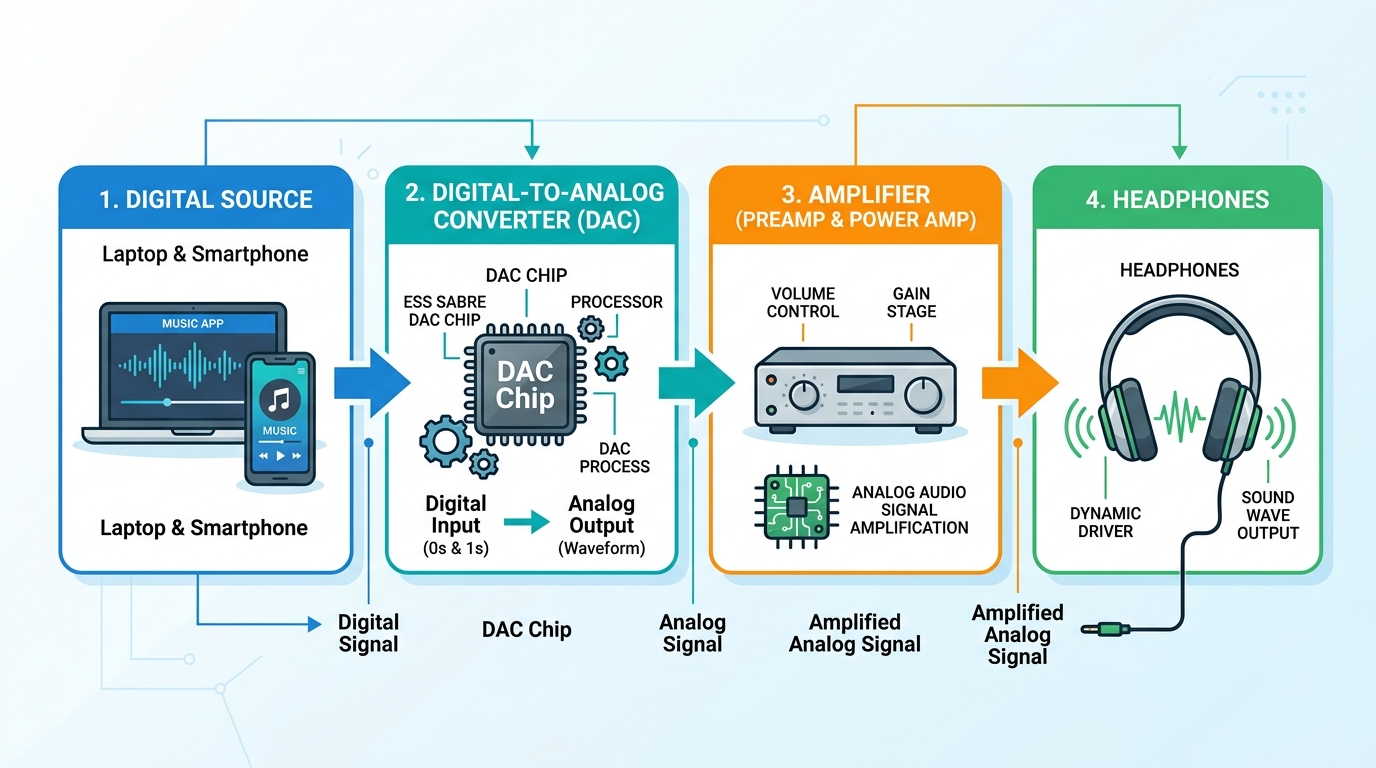
What is an Amp?
An Amp, or Amplifier, takes the weak analog signal produced by the DAC and boosts its power (voltage and current) so that it can drive the mechanical components of your headphones or speakers. Without an amplifier, the signal from a DAC would be too weak to produce audible sound.
Like DACs, amplifiers are built into almost every device that has a headphone jack or built-in speakers. But built-in amps often lack the power to properly drive high-impedance or low-sensitivity audiophile headphones. When an underpowered amp tries to push these demanding headphones, you might experience low volume, distorted bass, or a cramped soundstage.
The Benefits of Dedicated External DACs and Amps
Investing in a dedicated, external DAC and Amp (either as separate units in a “stack” or as a combined unit) can offer several significant benefits:
- Reduced Noise and Interference: External units are isolated from the electrical noise generated by your computer’s motherboard or smartphone’s processor, resulting in a blacker background and clearer audio.
- Higher Output Power: Dedicated amplifiers provide significantly more power, ensuring your headphones are driven to their full potential with tight bass and dynamic range.
- Better Format Support: High-end DACs can decode high-resolution audio formats (like DSD or high-bitrate PCM) that built-in DACs might not support.
- Physical Controls: Dedicated amps offer precise volume knobs and sometimes gain switches, giving you better tactile control over your listening experience.
Built-in vs. Dedicated Equipment
To help you understand the differences, here is a quick comparison between typical built-in audio components and dedicated external gear:
| Feature | Built-in (Smartphone/PC) | Dedicated (External DAC/Amp) |
|---|---|---|
| Interference Isolation | Poor (shares board with CPU/GPU) | Excellent (isolated circuitry) |
| Power Output | Low (usually under 30mW) | High (often 1000mW+) |
| Headphone Compatibility | Low impedance (IEMs, consumer cans) | All, including high impedance planar magnetics |
| Volume Control | Digital steps (can degrade quality) | Analog potentiometer (precise, uncompressed) |
| Cost | Free (included with device) | $100 to $2000+ |
Do You Really Need One?
The short answer is: It depends on your headphones.
If you are using standard consumer earbuds, wireless Bluetooth headphones (which have their own internal DACs and Amps), or easy-to-drive gaming headsets, an external DAC and Amp will likely not provide a noticeable improvement. Your money would be better spent upgrading the headphones themselves.
However, if you own or plan to purchase audiophile-grade headphones—such as the Sennheiser HD600 series, Beyerdynamic DT models with 250 ohms or higher, or power-hungry planar magnetic headphones from Hifiman or Audeze—an external DAC/Amp setup is highly recommended, if not entirely necessary. These headphones require clean, robust power to sound properly balanced and dynamic.
Conclusion
External DACs and Amps are not snake oil; they provide measurable and audible improvements to the audio chain. While they aren’t strictly necessary for every listener, they are the key to unlocking the true potential of high-end audio equipment. If you’re starting your audiophile journey, consider starting with a budget-friendly combo unit to hear the difference for yourself before diving into expensive standalone stacks.
What is an Amp?
An Amp, or Amplifier, takes the weak analog signal produced by the DAC and boosts its power (voltage and current) so that it can drive the mechanical components of your headphones or speakers. Without an amplifier, the signal from a DAC would be too weak to produce audible sound.
Like DACs, amplifiers are built into almost every device that has a headphone jack or built-in speakers. But built-in amps often lack the power to properly drive high-impedance or low-sensitivity audiophile headphones. When an underpowered amp tries to push these demanding headphones, you might experience low volume, distorted bass, or a cramped soundstage.
The Benefits of Dedicated External DACs and Amps
Investing in a dedicated, external DAC and Amp (either as separate units in a “stack” or as a combined unit) can offer several significant benefits:
- Reduced Noise and Interference: External units are isolated from the electrical noise generated by your computer’s motherboard or smartphone’s processor, resulting in a blacker background and clearer audio.
- Higher Output Power: Dedicated amplifiers provide significantly more power, ensuring your headphones are driven to their full potential with tight bass and dynamic range.
- Better Format Support: High-end DACs can decode high-resolution audio formats (like DSD or high-bitrate PCM) that built-in DACs might not support.
- Physical Controls: Dedicated amps offer precise volume knobs and sometimes gain switches, giving you better tactile control over your listening experience.
Built-in vs. Dedicated Equipment
To help you understand the differences, here is a quick comparison between typical built-in audio components and dedicated external gear:
| Feature | Built-in (Smartphone/PC) | Dedicated (External DAC/Amp) |
|---|---|---|
| Interference Isolation | Poor (shares board with CPU/GPU) | Excellent (isolated circuitry) |
| Power Output | Low (usually under 30mW) | High (often 1000mW+) |
| Headphone Compatibility | Low impedance (IEMs, consumer cans) | All, including high impedance planar magnetics |
| Volume Control | Digital steps (can degrade quality) | Analog potentiometer (precise, uncompressed) |
| Cost | Free (included with device) | $100 to $2000+ |
Do You Really Need One?
The short answer is: It depends on your headphones.
If you are using standard consumer earbuds, wireless Bluetooth headphones (which have their own internal DACs and Amps), or easy-to-drive gaming headsets, an external DAC and Amp will likely not provide a noticeable improvement. Your money would be better spent upgrading the headphones themselves.
However, if you own or plan to purchase audiophile-grade headphones—such as the Sennheiser HD600 series, Beyerdynamic DT models with 250 ohms or higher, or power-hungry planar magnetic headphones from Hifiman or Audeze—an external DAC/Amp setup is highly recommended, if not entirely necessary. These headphones require clean, robust power to sound properly balanced and dynamic.
Conclusion
External DACs and Amps are not snake oil; they provide measurable and audible improvements to the audio chain. While they aren’t strictly necessary for every listener, they are the key to unlocking the true potential of high-end audio equipment. If you’re starting your audiophile journey, consider starting with a budget-friendly combo unit to hear the difference for yourself before diving into expensive standalone stacks.
The truth is, if you are listening to digital audio, you are already using a DAC. Your smartphone, laptop, tablet, and TV all have built-in DACs. However, the DACs included in consumer electronics are often budget components designed to be just “good enough.” They share space with other internal components, which can lead to electrical interference, noise, and a generally flat or muddy sound profile.
What is an Amp?
An Amp, or Amplifier, takes the weak analog signal produced by the DAC and boosts its power (voltage and current) so that it can drive the mechanical components of your headphones or speakers. Without an amplifier, the signal from a DAC would be too weak to produce audible sound.
Like DACs, amplifiers are built into almost every device that has a headphone jack or built-in speakers. But built-in amps often lack the power to properly drive high-impedance or low-sensitivity audiophile headphones. When an underpowered amp tries to push these demanding headphones, you might experience low volume, distorted bass, or a cramped soundstage.
The Benefits of Dedicated External DACs and Amps
Investing in a dedicated, external DAC and Amp (either as separate units in a “stack” or as a combined unit) can offer several significant benefits:
- Reduced Noise and Interference: External units are isolated from the electrical noise generated by your computer’s motherboard or smartphone’s processor, resulting in a blacker background and clearer audio.
- Higher Output Power: Dedicated amplifiers provide significantly more power, ensuring your headphones are driven to their full potential with tight bass and dynamic range.
- Better Format Support: High-end DACs can decode high-resolution audio formats (like DSD or high-bitrate PCM) that built-in DACs might not support.
- Physical Controls: Dedicated amps offer precise volume knobs and sometimes gain switches, giving you better tactile control over your listening experience.
Built-in vs. Dedicated Equipment
To help you understand the differences, here is a quick comparison between typical built-in audio components and dedicated external gear:
| Feature | Built-in (Smartphone/PC) | Dedicated (External DAC/Amp) |
|---|---|---|
| Interference Isolation | Poor (shares board with CPU/GPU) | Excellent (isolated circuitry) |
| Power Output | Low (usually under 30mW) | High (often 1000mW+) |
| Headphone Compatibility | Low impedance (IEMs, consumer cans) | All, including high impedance planar magnetics |
| Volume Control | Digital steps (can degrade quality) | Analog potentiometer (precise, uncompressed) |
| Cost | Free (included with device) | $100 to $2000+ |
Do You Really Need One?
The short answer is: It depends on your headphones.
If you are using standard consumer earbuds, wireless Bluetooth headphones (which have their own internal DACs and Amps), or easy-to-drive gaming headsets, an external DAC and Amp will likely not provide a noticeable improvement. Your money would be better spent upgrading the headphones themselves.
However, if you own or plan to purchase audiophile-grade headphones—such as the Sennheiser HD600 series, Beyerdynamic DT models with 250 ohms or higher, or power-hungry planar magnetic headphones from Hifiman or Audeze—an external DAC/Amp setup is highly recommended, if not entirely necessary. These headphones require clean, robust power to sound properly balanced and dynamic.
Conclusion
External DACs and Amps are not snake oil; they provide measurable and audible improvements to the audio chain. While they aren’t strictly necessary for every listener, they are the key to unlocking the true potential of high-end audio equipment. If you’re starting your audiophile journey, consider starting with a budget-friendly combo unit to hear the difference for yourself before diving into expensive standalone stacks.
The truth is, if you are listening to digital audio, you are already using a DAC. Your smartphone, laptop, tablet, and TV all have built-in DACs. However, the DACs included in consumer electronics are often budget components designed to be just “good enough.” They share space with other internal components, which can lead to electrical interference, noise, and a generally flat or muddy sound profile.
What is an Amp?
An Amp, or Amplifier, takes the weak analog signal produced by the DAC and boosts its power (voltage and current) so that it can drive the mechanical components of your headphones or speakers. Without an amplifier, the signal from a DAC would be too weak to produce audible sound.
Like DACs, amplifiers are built into almost every device that has a headphone jack or built-in speakers. But built-in amps often lack the power to properly drive high-impedance or low-sensitivity audiophile headphones. When an underpowered amp tries to push these demanding headphones, you might experience low volume, distorted bass, or a cramped soundstage.
The Benefits of Dedicated External DACs and Amps
Investing in a dedicated, external DAC and Amp (either as separate units in a “stack” or as a combined unit) can offer several significant benefits:
- Reduced Noise and Interference: External units are isolated from the electrical noise generated by your computer’s motherboard or smartphone’s processor, resulting in a blacker background and clearer audio.
- Higher Output Power: Dedicated amplifiers provide significantly more power, ensuring your headphones are driven to their full potential with tight bass and dynamic range.
- Better Format Support: High-end DACs can decode high-resolution audio formats (like DSD or high-bitrate PCM) that built-in DACs might not support.
- Physical Controls: Dedicated amps offer precise volume knobs and sometimes gain switches, giving you better tactile control over your listening experience.
Built-in vs. Dedicated Equipment
To help you understand the differences, here is a quick comparison between typical built-in audio components and dedicated external gear:
| Feature | Built-in (Smartphone/PC) | Dedicated (External DAC/Amp) |
|---|---|---|
| Interference Isolation | Poor (shares board with CPU/GPU) | Excellent (isolated circuitry) |
| Power Output | Low (usually under 30mW) | High (often 1000mW+) |
| Headphone Compatibility | Low impedance (IEMs, consumer cans) | All, including high impedance planar magnetics |
| Volume Control | Digital steps (can degrade quality) | Analog potentiometer (precise, uncompressed) |
| Cost | Free (included with device) | $100 to $2000+ |
Do You Really Need One?
The short answer is: It depends on your headphones.
If you are using standard consumer earbuds, wireless Bluetooth headphones (which have their own internal DACs and Amps), or easy-to-drive gaming headsets, an external DAC and Amp will likely not provide a noticeable improvement. Your money would be better spent upgrading the headphones themselves.
However, if you own or plan to purchase audiophile-grade headphones—such as the Sennheiser HD600 series, Beyerdynamic DT models with 250 ohms or higher, or power-hungry planar magnetic headphones from Hifiman or Audeze—an external DAC/Amp setup is highly recommended, if not entirely necessary. These headphones require clean, robust power to sound properly balanced and dynamic.
Conclusion
External DACs and Amps are not snake oil; they provide measurable and audible improvements to the audio chain. While they aren’t strictly necessary for every listener, they are the key to unlocking the true potential of high-end audio equipment. If you’re starting your audiophile journey, consider starting with a budget-friendly combo unit to hear the difference for yourself before diving into expensive standalone stacks.
DAC stands for Digital-to-Analog Converter. Its purpose is exactly what the name implies: it takes digital audio information (the 1s and 0s stored on your computer, smartphone, or streamed over the internet) and converts it into an analog electrical signal. This analog signal is what eventually moves the drivers in your headphones or speakers, creating the sound waves your ears can hear.
The truth is, if you are listening to digital audio, you are already using a DAC. Your smartphone, laptop, tablet, and TV all have built-in DACs. However, the DACs included in consumer electronics are often budget components designed to be just “good enough.” They share space with other internal components, which can lead to electrical interference, noise, and a generally flat or muddy sound profile.
What is an Amp?
An Amp, or Amplifier, takes the weak analog signal produced by the DAC and boosts its power (voltage and current) so that it can drive the mechanical components of your headphones or speakers. Without an amplifier, the signal from a DAC would be too weak to produce audible sound.
Like DACs, amplifiers are built into almost every device that has a headphone jack or built-in speakers. But built-in amps often lack the power to properly drive high-impedance or low-sensitivity audiophile headphones. When an underpowered amp tries to push these demanding headphones, you might experience low volume, distorted bass, or a cramped soundstage.
The Benefits of Dedicated External DACs and Amps
Investing in a dedicated, external DAC and Amp (either as separate units in a “stack” or as a combined unit) can offer several significant benefits:
- Reduced Noise and Interference: External units are isolated from the electrical noise generated by your computer’s motherboard or smartphone’s processor, resulting in a blacker background and clearer audio.
- Higher Output Power: Dedicated amplifiers provide significantly more power, ensuring your headphones are driven to their full potential with tight bass and dynamic range.
- Better Format Support: High-end DACs can decode high-resolution audio formats (like DSD or high-bitrate PCM) that built-in DACs might not support.
- Physical Controls: Dedicated amps offer precise volume knobs and sometimes gain switches, giving you better tactile control over your listening experience.
Built-in vs. Dedicated Equipment
To help you understand the differences, here is a quick comparison between typical built-in audio components and dedicated external gear:
| Feature | Built-in (Smartphone/PC) | Dedicated (External DAC/Amp) |
|---|---|---|
| Interference Isolation | Poor (shares board with CPU/GPU) | Excellent (isolated circuitry) |
| Power Output | Low (usually under 30mW) | High (often 1000mW+) |
| Headphone Compatibility | Low impedance (IEMs, consumer cans) | All, including high impedance planar magnetics |
| Volume Control | Digital steps (can degrade quality) | Analog potentiometer (precise, uncompressed) |
| Cost | Free (included with device) | $100 to $2000+ |
Do You Really Need One?
The short answer is: It depends on your headphones.
If you are using standard consumer earbuds, wireless Bluetooth headphones (which have their own internal DACs and Amps), or easy-to-drive gaming headsets, an external DAC and Amp will likely not provide a noticeable improvement. Your money would be better spent upgrading the headphones themselves.
However, if you own or plan to purchase audiophile-grade headphones—such as the Sennheiser HD600 series, Beyerdynamic DT models with 250 ohms or higher, or power-hungry planar magnetic headphones from Hifiman or Audeze—an external DAC/Amp setup is highly recommended, if not entirely necessary. These headphones require clean, robust power to sound properly balanced and dynamic.
Conclusion
External DACs and Amps are not snake oil; they provide measurable and audible improvements to the audio chain. While they aren’t strictly necessary for every listener, they are the key to unlocking the true potential of high-end audio equipment. If you’re starting your audiophile journey, consider starting with a budget-friendly combo unit to hear the difference for yourself before diving into expensive standalone stacks.
DAC stands for Digital-to-Analog Converter. Its purpose is exactly what the name implies: it takes digital audio information (the 1s and 0s stored on your computer, smartphone, or streamed over the internet) and converts it into an analog electrical signal. This analog signal is what eventually moves the drivers in your headphones or speakers, creating the sound waves your ears can hear.
The truth is, if you are listening to digital audio, you are already using a DAC. Your smartphone, laptop, tablet, and TV all have built-in DACs. However, the DACs included in consumer electronics are often budget components designed to be just “good enough.” They share space with other internal components, which can lead to electrical interference, noise, and a generally flat or muddy sound profile.
What is an Amp?
An Amp, or Amplifier, takes the weak analog signal produced by the DAC and boosts its power (voltage and current) so that it can drive the mechanical components of your headphones or speakers. Without an amplifier, the signal from a DAC would be too weak to produce audible sound.
Like DACs, amplifiers are built into almost every device that has a headphone jack or built-in speakers. But built-in amps often lack the power to properly drive high-impedance or low-sensitivity audiophile headphones. When an underpowered amp tries to push these demanding headphones, you might experience low volume, distorted bass, or a cramped soundstage.
The Benefits of Dedicated External DACs and Amps
Investing in a dedicated, external DAC and Amp (either as separate units in a “stack” or as a combined unit) can offer several significant benefits:
- Reduced Noise and Interference: External units are isolated from the electrical noise generated by your computer’s motherboard or smartphone’s processor, resulting in a blacker background and clearer audio.
- Higher Output Power: Dedicated amplifiers provide significantly more power, ensuring your headphones are driven to their full potential with tight bass and dynamic range.
- Better Format Support: High-end DACs can decode high-resolution audio formats (like DSD or high-bitrate PCM) that built-in DACs might not support.
- Physical Controls: Dedicated amps offer precise volume knobs and sometimes gain switches, giving you better tactile control over your listening experience.
Built-in vs. Dedicated Equipment
To help you understand the differences, here is a quick comparison between typical built-in audio components and dedicated external gear:
| Feature | Built-in (Smartphone/PC) | Dedicated (External DAC/Amp) |
|---|---|---|
| Interference Isolation | Poor (shares board with CPU/GPU) | Excellent (isolated circuitry) |
| Power Output | Low (usually under 30mW) | High (often 1000mW+) |
| Headphone Compatibility | Low impedance (IEMs, consumer cans) | All, including high impedance planar magnetics |
| Volume Control | Digital steps (can degrade quality) | Analog potentiometer (precise, uncompressed) |
| Cost | Free (included with device) | $100 to $2000+ |
Do You Really Need One?
The short answer is: It depends on your headphones.
If you are using standard consumer earbuds, wireless Bluetooth headphones (which have their own internal DACs and Amps), or easy-to-drive gaming headsets, an external DAC and Amp will likely not provide a noticeable improvement. Your money would be better spent upgrading the headphones themselves.
However, if you own or plan to purchase audiophile-grade headphones—such as the Sennheiser HD600 series, Beyerdynamic DT models with 250 ohms or higher, or power-hungry planar magnetic headphones from Hifiman or Audeze—an external DAC/Amp setup is highly recommended, if not entirely necessary. These headphones require clean, robust power to sound properly balanced and dynamic.
Conclusion
External DACs and Amps are not snake oil; they provide measurable and audible improvements to the audio chain. While they aren’t strictly necessary for every listener, they are the key to unlocking the true potential of high-end audio equipment. If you’re starting your audiophile journey, consider starting with a budget-friendly combo unit to hear the difference for yourself before diving into expensive standalone stacks.
What is a DAC?
DAC stands for Digital-to-Analog Converter. Its purpose is exactly what the name implies: it takes digital audio information (the 1s and 0s stored on your computer, smartphone, or streamed over the internet) and converts it into an analog electrical signal. This analog signal is what eventually moves the drivers in your headphones or speakers, creating the sound waves your ears can hear.
The truth is, if you are listening to digital audio, you are already using a DAC. Your smartphone, laptop, tablet, and TV all have built-in DACs. However, the DACs included in consumer electronics are often budget components designed to be just “good enough.” They share space with other internal components, which can lead to electrical interference, noise, and a generally flat or muddy sound profile.
What is an Amp?
An Amp, or Amplifier, takes the weak analog signal produced by the DAC and boosts its power (voltage and current) so that it can drive the mechanical components of your headphones or speakers. Without an amplifier, the signal from a DAC would be too weak to produce audible sound.
Like DACs, amplifiers are built into almost every device that has a headphone jack or built-in speakers. But built-in amps often lack the power to properly drive high-impedance or low-sensitivity audiophile headphones. When an underpowered amp tries to push these demanding headphones, you might experience low volume, distorted bass, or a cramped soundstage.
The Benefits of Dedicated External DACs and Amps
Investing in a dedicated, external DAC and Amp (either as separate units in a “stack” or as a combined unit) can offer several significant benefits:
- Reduced Noise and Interference: External units are isolated from the electrical noise generated by your computer’s motherboard or smartphone’s processor, resulting in a blacker background and clearer audio.
- Higher Output Power: Dedicated amplifiers provide significantly more power, ensuring your headphones are driven to their full potential with tight bass and dynamic range.
- Better Format Support: High-end DACs can decode high-resolution audio formats (like DSD or high-bitrate PCM) that built-in DACs might not support.
- Physical Controls: Dedicated amps offer precise volume knobs and sometimes gain switches, giving you better tactile control over your listening experience.
Built-in vs. Dedicated Equipment
To help you understand the differences, here is a quick comparison between typical built-in audio components and dedicated external gear:
| Feature | Built-in (Smartphone/PC) | Dedicated (External DAC/Amp) |
|---|---|---|
| Interference Isolation | Poor (shares board with CPU/GPU) | Excellent (isolated circuitry) |
| Power Output | Low (usually under 30mW) | High (often 1000mW+) |
| Headphone Compatibility | Low impedance (IEMs, consumer cans) | All, including high impedance planar magnetics |
| Volume Control | Digital steps (can degrade quality) | Analog potentiometer (precise, uncompressed) |
| Cost | Free (included with device) | $100 to $2000+ |
Do You Really Need One?
The short answer is: It depends on your headphones.
If you are using standard consumer earbuds, wireless Bluetooth headphones (which have their own internal DACs and Amps), or easy-to-drive gaming headsets, an external DAC and Amp will likely not provide a noticeable improvement. Your money would be better spent upgrading the headphones themselves.
However, if you own or plan to purchase audiophile-grade headphones—such as the Sennheiser HD600 series, Beyerdynamic DT models with 250 ohms or higher, or power-hungry planar magnetic headphones from Hifiman or Audeze—an external DAC/Amp setup is highly recommended, if not entirely necessary. These headphones require clean, robust power to sound properly balanced and dynamic.
Conclusion
External DACs and Amps are not snake oil; they provide measurable and audible improvements to the audio chain. While they aren’t strictly necessary for every listener, they are the key to unlocking the true potential of high-end audio equipment. If you’re starting your audiophile journey, consider starting with a budget-friendly combo unit to hear the difference for yourself before diving into expensive standalone stacks.
What is a DAC?
DAC stands for Digital-to-Analog Converter. Its purpose is exactly what the name implies: it takes digital audio information (the 1s and 0s stored on your computer, smartphone, or streamed over the internet) and converts it into an analog electrical signal. This analog signal is what eventually moves the drivers in your headphones or speakers, creating the sound waves your ears can hear.
The truth is, if you are listening to digital audio, you are already using a DAC. Your smartphone, laptop, tablet, and TV all have built-in DACs. However, the DACs included in consumer electronics are often budget components designed to be just “good enough.” They share space with other internal components, which can lead to electrical interference, noise, and a generally flat or muddy sound profile.
What is an Amp?
An Amp, or Amplifier, takes the weak analog signal produced by the DAC and boosts its power (voltage and current) so that it can drive the mechanical components of your headphones or speakers. Without an amplifier, the signal from a DAC would be too weak to produce audible sound.
Like DACs, amplifiers are built into almost every device that has a headphone jack or built-in speakers. But built-in amps often lack the power to properly drive high-impedance or low-sensitivity audiophile headphones. When an underpowered amp tries to push these demanding headphones, you might experience low volume, distorted bass, or a cramped soundstage.
The Benefits of Dedicated External DACs and Amps
Investing in a dedicated, external DAC and Amp (either as separate units in a “stack” or as a combined unit) can offer several significant benefits:
- Reduced Noise and Interference: External units are isolated from the electrical noise generated by your computer’s motherboard or smartphone’s processor, resulting in a blacker background and clearer audio.
- Higher Output Power: Dedicated amplifiers provide significantly more power, ensuring your headphones are driven to their full potential with tight bass and dynamic range.
- Better Format Support: High-end DACs can decode high-resolution audio formats (like DSD or high-bitrate PCM) that built-in DACs might not support.
- Physical Controls: Dedicated amps offer precise volume knobs and sometimes gain switches, giving you better tactile control over your listening experience.
Built-in vs. Dedicated Equipment
To help you understand the differences, here is a quick comparison between typical built-in audio components and dedicated external gear:
| Feature | Built-in (Smartphone/PC) | Dedicated (External DAC/Amp) |
|---|---|---|
| Interference Isolation | Poor (shares board with CPU/GPU) | Excellent (isolated circuitry) |
| Power Output | Low (usually under 30mW) | High (often 1000mW+) |
| Headphone Compatibility | Low impedance (IEMs, consumer cans) | All, including high impedance planar magnetics |
| Volume Control | Digital steps (can degrade quality) | Analog potentiometer (precise, uncompressed) |
| Cost | Free (included with device) | $100 to $2000+ |
Do You Really Need One?
The short answer is: It depends on your headphones.
If you are using standard consumer earbuds, wireless Bluetooth headphones (which have their own internal DACs and Amps), or easy-to-drive gaming headsets, an external DAC and Amp will likely not provide a noticeable improvement. Your money would be better spent upgrading the headphones themselves.
However, if you own or plan to purchase audiophile-grade headphones—such as the Sennheiser HD600 series, Beyerdynamic DT models with 250 ohms or higher, or power-hungry planar magnetic headphones from Hifiman or Audeze—an external DAC/Amp setup is highly recommended, if not entirely necessary. These headphones require clean, robust power to sound properly balanced and dynamic.
Conclusion
External DACs and Amps are not snake oil; they provide measurable and audible improvements to the audio chain. While they aren’t strictly necessary for every listener, they are the key to unlocking the true potential of high-end audio equipment. If you’re starting your audiophile journey, consider starting with a budget-friendly combo unit to hear the difference for yourself before diving into expensive standalone stacks.
If you have ever explored the world of high-fidelity audio, you have almost certainly encountered the terms “DAC” and “Amp.” These two components are fundamental to the audiophile experience, often discussed as the gateway to pristine sound quality. But what exactly are they, and more importantly, do you really need to invest in dedicated external units for your listening setup?
What is a DAC?
DAC stands for Digital-to-Analog Converter. Its purpose is exactly what the name implies: it takes digital audio information (the 1s and 0s stored on your computer, smartphone, or streamed over the internet) and converts it into an analog electrical signal. This analog signal is what eventually moves the drivers in your headphones or speakers, creating the sound waves your ears can hear.
The truth is, if you are listening to digital audio, you are already using a DAC. Your smartphone, laptop, tablet, and TV all have built-in DACs. However, the DACs included in consumer electronics are often budget components designed to be just “good enough.” They share space with other internal components, which can lead to electrical interference, noise, and a generally flat or muddy sound profile.
What is an Amp?
An Amp, or Amplifier, takes the weak analog signal produced by the DAC and boosts its power (voltage and current) so that it can drive the mechanical components of your headphones or speakers. Without an amplifier, the signal from a DAC would be too weak to produce audible sound.
Like DACs, amplifiers are built into almost every device that has a headphone jack or built-in speakers. But built-in amps often lack the power to properly drive high-impedance or low-sensitivity audiophile headphones. When an underpowered amp tries to push these demanding headphones, you might experience low volume, distorted bass, or a cramped soundstage.
The Benefits of Dedicated External DACs and Amps
Investing in a dedicated, external DAC and Amp (either as separate units in a “stack” or as a combined unit) can offer several significant benefits:
- Reduced Noise and Interference: External units are isolated from the electrical noise generated by your computer’s motherboard or smartphone’s processor, resulting in a blacker background and clearer audio.
- Higher Output Power: Dedicated amplifiers provide significantly more power, ensuring your headphones are driven to their full potential with tight bass and dynamic range.
- Better Format Support: High-end DACs can decode high-resolution audio formats (like DSD or high-bitrate PCM) that built-in DACs might not support.
- Physical Controls: Dedicated amps offer precise volume knobs and sometimes gain switches, giving you better tactile control over your listening experience.
Built-in vs. Dedicated Equipment
To help you understand the differences, here is a quick comparison between typical built-in audio components and dedicated external gear:
| Feature | Built-in (Smartphone/PC) | Dedicated (External DAC/Amp) |
|---|---|---|
| Interference Isolation | Poor (shares board with CPU/GPU) | Excellent (isolated circuitry) |
| Power Output | Low (usually under 30mW) | High (often 1000mW+) |
| Headphone Compatibility | Low impedance (IEMs, consumer cans) | All, including high impedance planar magnetics |
| Volume Control | Digital steps (can degrade quality) | Analog potentiometer (precise, uncompressed) |
| Cost | Free (included with device) | $100 to $2000+ |
Do You Really Need One?
The short answer is: It depends on your headphones.
If you are using standard consumer earbuds, wireless Bluetooth headphones (which have their own internal DACs and Amps), or easy-to-drive gaming headsets, an external DAC and Amp will likely not provide a noticeable improvement. Your money would be better spent upgrading the headphones themselves.
However, if you own or plan to purchase audiophile-grade headphones—such as the Sennheiser HD600 series, Beyerdynamic DT models with 250 ohms or higher, or power-hungry planar magnetic headphones from Hifiman or Audeze—an external DAC/Amp setup is highly recommended, if not entirely necessary. These headphones require clean, robust power to sound properly balanced and dynamic.
Conclusion
External DACs and Amps are not snake oil; they provide measurable and audible improvements to the audio chain. While they aren’t strictly necessary for every listener, they are the key to unlocking the true potential of high-end audio equipment. If you’re starting your audiophile journey, consider starting with a budget-friendly combo unit to hear the difference for yourself before diving into expensive standalone stacks.
If you have ever explored the world of high-fidelity audio, you have almost certainly encountered the terms “DAC” and “Amp.” These two components are fundamental to the audiophile experience, often discussed as the gateway to pristine sound quality. But what exactly are they, and more importantly, do you really need to invest in dedicated external units for your listening setup?
What is a DAC?
DAC stands for Digital-to-Analog Converter. Its purpose is exactly what the name implies: it takes digital audio information (the 1s and 0s stored on your computer, smartphone, or streamed over the internet) and converts it into an analog electrical signal. This analog signal is what eventually moves the drivers in your headphones or speakers, creating the sound waves your ears can hear.
The truth is, if you are listening to digital audio, you are already using a DAC. Your smartphone, laptop, tablet, and TV all have built-in DACs. However, the DACs included in consumer electronics are often budget components designed to be just “good enough.” They share space with other internal components, which can lead to electrical interference, noise, and a generally flat or muddy sound profile.
What is an Amp?
An Amp, or Amplifier, takes the weak analog signal produced by the DAC and boosts its power (voltage and current) so that it can drive the mechanical components of your headphones or speakers. Without an amplifier, the signal from a DAC would be too weak to produce audible sound.
Like DACs, amplifiers are built into almost every device that has a headphone jack or built-in speakers. But built-in amps often lack the power to properly drive high-impedance or low-sensitivity audiophile headphones. When an underpowered amp tries to push these demanding headphones, you might experience low volume, distorted bass, or a cramped soundstage.
The Benefits of Dedicated External DACs and Amps
Investing in a dedicated, external DAC and Amp (either as separate units in a “stack” or as a combined unit) can offer several significant benefits:
- Reduced Noise and Interference: External units are isolated from the electrical noise generated by your computer’s motherboard or smartphone’s processor, resulting in a blacker background and clearer audio.
- Higher Output Power: Dedicated amplifiers provide significantly more power, ensuring your headphones are driven to their full potential with tight bass and dynamic range.
- Better Format Support: High-end DACs can decode high-resolution audio formats (like DSD or high-bitrate PCM) that built-in DACs might not support.
- Physical Controls: Dedicated amps offer precise volume knobs and sometimes gain switches, giving you better tactile control over your listening experience.
Built-in vs. Dedicated Equipment
To help you understand the differences, here is a quick comparison between typical built-in audio components and dedicated external gear:
| Feature | Built-in (Smartphone/PC) | Dedicated (External DAC/Amp) |
|---|---|---|
| Interference Isolation | Poor (shares board with CPU/GPU) | Excellent (isolated circuitry) |
| Power Output | Low (usually under 30mW) | High (often 1000mW+) |
| Headphone Compatibility | Low impedance (IEMs, consumer cans) | All, including high impedance planar magnetics |
| Volume Control | Digital steps (can degrade quality) | Analog potentiometer (precise, uncompressed) |
| Cost | Free (included with device) | $100 to $2000+ |
Do You Really Need One?
The short answer is: It depends on your headphones.
If you are using standard consumer earbuds, wireless Bluetooth headphones (which have their own internal DACs and Amps), or easy-to-drive gaming headsets, an external DAC and Amp will likely not provide a noticeable improvement. Your money would be better spent upgrading the headphones themselves.
However, if you own or plan to purchase audiophile-grade headphones—such as the Sennheiser HD600 series, Beyerdynamic DT models with 250 ohms or higher, or power-hungry planar magnetic headphones from Hifiman or Audeze—an external DAC/Amp setup is highly recommended, if not entirely necessary. These headphones require clean, robust power to sound properly balanced and dynamic.
Conclusion
External DACs and Amps are not snake oil; they provide measurable and audible improvements to the audio chain. While they aren’t strictly necessary for every listener, they are the key to unlocking the true potential of high-end audio equipment. If you’re starting your audiophile journey, consider starting with a budget-friendly combo unit to hear the difference for yourself before diving into expensive standalone stacks.
If you have ever explored the world of high-fidelity audio, you have almost certainly encountered the terms “DAC” and “Amp.” These two components are fundamental to the audiophile experience, often discussed as the gateway to pristine sound quality. But what exactly are they, and more importantly, do you really need to invest in dedicated external units for your listening setup?
What is a DAC?
DAC stands for Digital-to-Analog Converter. Its purpose is exactly what the name implies: it takes digital audio information (the 1s and 0s stored on your computer, smartphone, or streamed over the internet) and converts it into an analog electrical signal. This analog signal is what eventually moves the drivers in your headphones or speakers, creating the sound waves your ears can hear.
The truth is, if you are listening to digital audio, you are already using a DAC. Your smartphone, laptop, tablet, and TV all have built-in DACs. However, the DACs included in consumer electronics are often budget components designed to be just “good enough.” They share space with other internal components, which can lead to electrical interference, noise, and a generally flat or muddy sound profile.
What is an Amp?
An Amp, or Amplifier, takes the weak analog signal produced by the DAC and boosts its power (voltage and current) so that it can drive the mechanical components of your headphones or speakers. Without an amplifier, the signal from a DAC would be too weak to produce audible sound.
Like DACs, amplifiers are built into almost every device that has a headphone jack or built-in speakers. But built-in amps often lack the power to properly drive high-impedance or low-sensitivity audiophile headphones. When an underpowered amp tries to push these demanding headphones, you might experience low volume, distorted bass, or a cramped soundstage.
The Benefits of Dedicated External DACs and Amps
Investing in a dedicated, external DAC and Amp (either as separate units in a “stack” or as a combined unit) can offer several significant benefits:
- Reduced Noise and Interference: External units are isolated from the electrical noise generated by your computer’s motherboard or smartphone’s processor, resulting in a blacker background and clearer audio.
- Higher Output Power: Dedicated amplifiers provide significantly more power, ensuring your headphones are driven to their full potential with tight bass and dynamic range.
- Better Format Support: High-end DACs can decode high-resolution audio formats (like DSD or high-bitrate PCM) that built-in DACs might not support.
- Physical Controls: Dedicated amps offer precise volume knobs and sometimes gain switches, giving you better tactile control over your listening experience.
Built-in vs. Dedicated Equipment
To help you understand the differences, here is a quick comparison between typical built-in audio components and dedicated external gear:
| Feature | Built-in (Smartphone/PC) | Dedicated (External DAC/Amp) |
|---|---|---|
| Interference Isolation | Poor (shares board with CPU/GPU) | Excellent (isolated circuitry) |
| Power Output | Low (usually under 30mW) | High (often 1000mW+) |
| Headphone Compatibility | Low impedance (IEMs, consumer cans) | All, including high impedance planar magnetics |
| Volume Control | Digital steps (can degrade quality) | Analog potentiometer (precise, uncompressed) |
| Cost | Free (included with device) | $100 to $2000+ |
Do You Really Need One?
The short answer is: It depends on your headphones.
If you are using standard consumer earbuds, wireless Bluetooth headphones (which have their own internal DACs and Amps), or easy-to-drive gaming headsets, an external DAC and Amp will likely not provide a noticeable improvement. Your money would be better spent upgrading the headphones themselves.
However, if you own or plan to purchase audiophile-grade headphones—such as the Sennheiser HD600 series, Beyerdynamic DT models with 250 ohms or higher, or power-hungry planar magnetic headphones from Hifiman or Audeze—an external DAC/Amp setup is highly recommended, if not entirely necessary. These headphones require clean, robust power to sound properly balanced and dynamic.
Conclusion
External DACs and Amps are not snake oil; they provide measurable and audible improvements to the audio chain. While they aren’t strictly necessary for every listener, they are the key to unlocking the true potential of high-end audio equipment. If you’re starting your audiophile journey, consider starting with a budget-friendly combo unit to hear the difference for yourself before diving into expensive standalone stacks.
Discuss more about this, FAQ, Announcements and Miscellaneous, over on our community.
